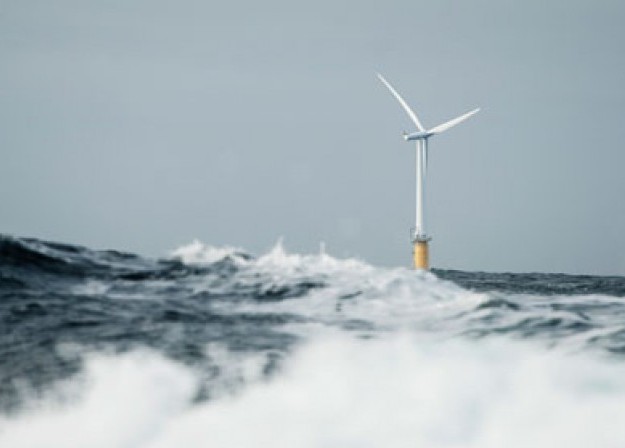
Danish engineering consultancy Ramboll has been selected by the Carbon Trust-led Floating Wind Joint Industry Programme (JIP) to review the design and performance of different mooring systems for floating offshore turbines.
The study will identify opportunities for optimisation and outline future research and development work that can reduce the cost and risk of mooring systems.
The project is part of the second phase of the Carbon Trust Floating Wind JIP, a collaboration between the Scottish Government and eight industry partners, including Dong Energy, Engie, Eolfi, Eon, Innogy, Kyuden Mirai Energy, Statoil and Vattenfall.
Ramboll project manager Denis Matha and technical director Alexander Mitzlaff said mooring systems in floating wind are more challenging than the oil and gas sector.
This is because, for example, of “the different dynamic loading characteristics, influenced by the wind turbine operation, the reduced safety levels imposed by floating wind standards, the smaller size of the moored substructures, their comparatively shallow sites, and challenges related to large wind farms, such as subsea architecture, layout and timely installation of multiple units,” they said.
Carbon Trust manager Rhodri James said: “These studies will play an important role in identifying and prioritising the most critical challenges to inform future research initiatives.
“We are confident that we have assembled a high quality team of experts with the requisite skills and experience to deliver impactful projects for the JIP partners and wider industry.”
Image: Statoil
Ramboll secures floating ties
Danes to review design of moorings for Carbon Trust-led initiative
 By EBS