Transmission system operator TenneT is mulling a series of DC electricity options to allow for larger-scale, up to 2GW offshore wind projects in the Dutch North Sea.
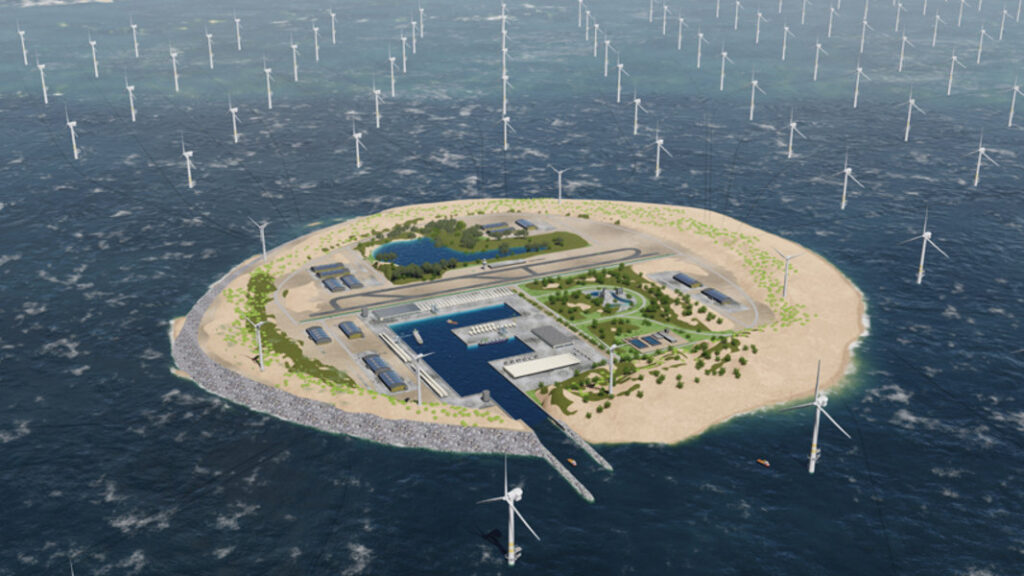
The deployment of converter platforms and the construction of artificial islands that would feature DC substations are both being looked at.
In the former case, TenneT said it would convert AC produced by up to 2GW projects for transport ashore.
For the latter option, the TSO said the island would place the DC substations on solid ground that would be more “advantageous” than several converter platforms.
“In addition to the benefits mentioned above, an artificial island can also accommodate port and maintenance facilities and systems for the conversion of wind energy to hydrogen, and can facilitate a so-called WindConnector link to the UK,” TenneT said.
In a separate study published today, TenneT and the Crown Estate said a WindConnector that would interconnect the UK and European networks can be a “cost effective” solution.
The report by Poyry shows that “multiple use of network components can reduce the energy costs of consumers by limiting the need for and more effective use of network infrastructure at sea”.
Further research and “adjustments” to “regulatory frameworks” are needed, TenneT and the Crown Estate added.
“The research clearly shows that combining the infrastructure for offshore wind energy with an interconnector significantly increases the occupancy rate and thus lowers the energy costs for consumers,” said TenneT chief executive Mel Kroon, CEO of TenneT.
“We can now also look at the extent to which a WindConnector system can be used for future developments of offshore wind energy between the Netherlands and Great Britain.”
Image: TenneT