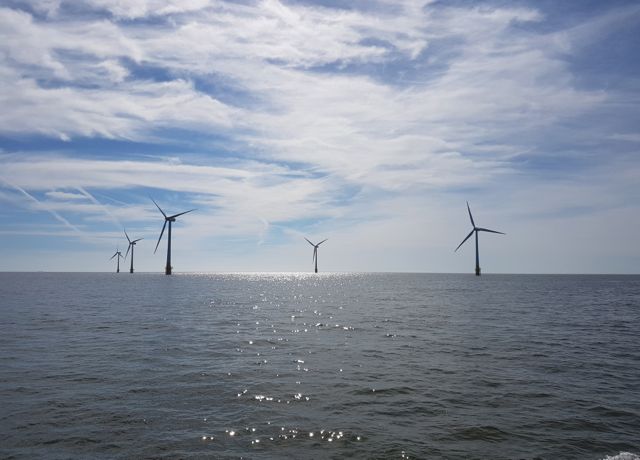
Offshore wind turbines built according to current standards may not be able to withstand the powerful gusts generated by the strongest hurricanes, according to research led by the University of Colorado Boulder.
The study, which was conducted in collaboration with the National Center for Atmospheric Research and the US Department of Energy’s National Renewable Energy Laboratory, highlights the limitations of current turbine design.
The researchers said the study’s findings could provide guidance for manufacturers and engineers looking to build more hurricane-resilient turbines in the future.
They added that turbine design standards are governed by the International Electrotechnical Commission (IEC), but currently no specific guidelines exist for hurricane-force winds.
The work aimed to test the limits of the existing design standard and used computer simulations of large hurricanes because of a lack of observational data across the height of a wind turbine.
It found that under category five hurricane conditions, average wind speeds near the storm’s eyewall reached 90 metres-per-second, well above the 50 metres-per-second threshold set by current standards.
Lead author of the study and University of Colorado Boulder Department of Atmospheric and Oceanic Sciences graduate researcher Rochelle Worsnop said: “We wanted to understand the worst-case scenario for offshore wind turbines, and for hurricanes, that’s a category five.”
The researchers added that current standards for turbines also do not account for veer – a measure of the change in wind direction across a vertical span.
The simulations showed that wind direction changed by as much as 55 degrees between the tip of the rotor and its hub, creating a potentially dangerous strain on the blade, they said.
The findings could be used to help wind farm developers improve design standards as well as to help stakeholders make informed decisions about the costs, benefits and risks of placing turbines in hurricane-prone areas, the study said.
The next stage of the research is to determine how often an offshore wind farm would be impacted by such extreme winds over its 20-to-30-year lifespan, the researchers added.
Image: reNEWS
Boffins spotlight hurricane risk
Current turbines may not withstand extreme wind says US university study
 By EBS