


Spain’s government says it will use the full extent of its renewable energy manufacturing supply chain to accelerate the energy transition in the wake of the conflict in the Middle East.
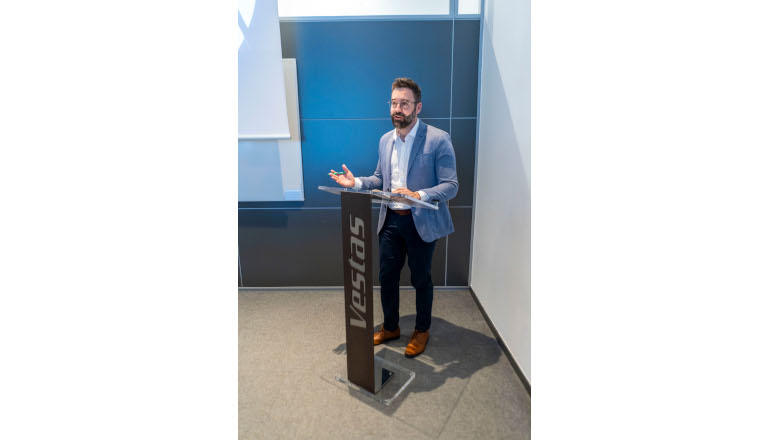
Secretary of state for Energy Joan Groizard Payeras (pictured) told reporters that Spain’s “cradle to grave” capabilities for wind turbine manufacturing and industrial footprint for other technologies will help the country maximise the use of “homegrown energy” that is “made in Spain”.
Groizard was speak during a press visit to Vestas’ Daimiel manufacturing facility near Madrid, where the OEM produces around 18 blades per week for its Enventus V150 and V163 turbines. “This government has always defended the energy transition, not only as part of our climate commitment, but also in relation to strategic autonomy, industrial opportunities and jobs,” he said.
Groizard added that Spain has the expertise to “design, manufacture, build and operate” components for wind projects, and said that the growing opportunity for repowering older sites in the country would boost investment in its emerging recycling capabilities.
He also noted that local supply chain investment would be essential for Europe to ensure the region doesn’t “switch from one dependency to another”, alluding to concerns over reliance on components from Asian manufacturers.
Spain’s government has already provided around €330m of financial support for 33 energy transition-related industrial projects, including 11 projects in. the wind sector. “These also include solar PV, green hydrogen and battery storage projects,” Groizard said.
The Minister’s comments follow an announcement last week by Spain’s Ministry for Ecological Transition and the Demographic Challenge of four public consultations over proposed legislation to accelerate the energy transition.
The proposals form part of Spain’s response to the Iran war, and include plans to introduce renewable energy acceleration areas and create a new “standard of excellence” for renewable energy and network projects to ensure investments add value while protecting the environment and providing social benefits to local communities.
“Social and environmental excellence will be the standard, and social benefits for local communities will be an obligation” said Groizard.