


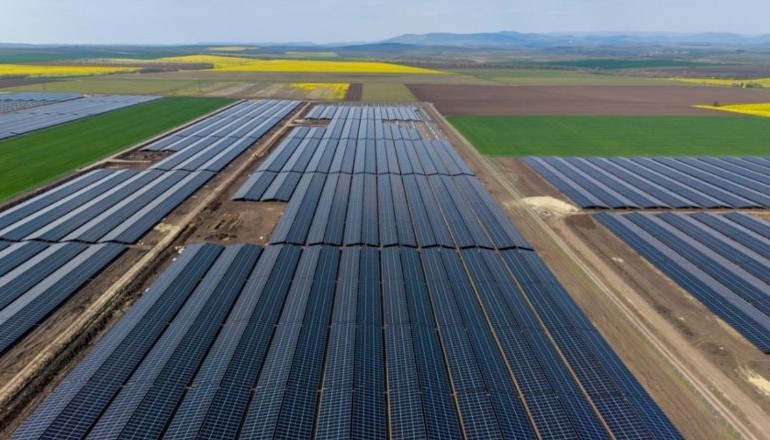
The European Bank for Reconstruction and Development (‘EBRD’) is providing a €70 million loan to special purpose vehicles owned by Renalfa IPP for a solar and battery project in northeastern Hungary.
The EBRD said the loan forms part of a €210 million financing package with commercial banks to develop, construct and operate a 450MW solar photovoltaic portfolio with a co-located 250MW/1GWh battery energy storage system.
The bank added that the transaction is one of the first instances of project financing for a utility-scale hybrid renewable asset in Central and Eastern Europe.
The project is among the largest renewable energy developments undertaken in Hungary and will deliver around 448GWh of renewable electricity once operational.
The electricity produced will be sold in the Hungarian market without a support scheme or a corporate power purchase agreement.
By integrating utility scale battery storage with solar PV generation, the project will address intermittency challenges, enhance grid flexibility and improve energy security.
“We are thankful to EBRD for its continuous support for our innovative business models and cutting-edge technologies. When operational later this year, this large hybrid asset will allow us to offer green baseload products to Hungarian electricity market and a number of flexibility services to the grid,” said Ivo Prokopiev, chief executive of Renalfa IPP.
“This investment marks an important milestone for the EBRD in Hungary, as it is our first energy project in the country since 2010. Returning to the Hungarian energy sector with such a large-scale and innovative project underlines the Bank’s renewed commitment to supporting the green transition and strengthening energy security in the country,” said Anca Ionescu, regional head Hungary, Slovakia and Czech Republic at EBRD.
“We are very pleased to support our long-standing client, Renalfa IPP, with another groundbreaking project in Hungary. By combining large-scale solar generation with battery storage, this investment will play a key role in strengthening Hungary’s energy system, enhancing security of supply and setting an important precedent for the wider Central and Eastern Europe region.”