


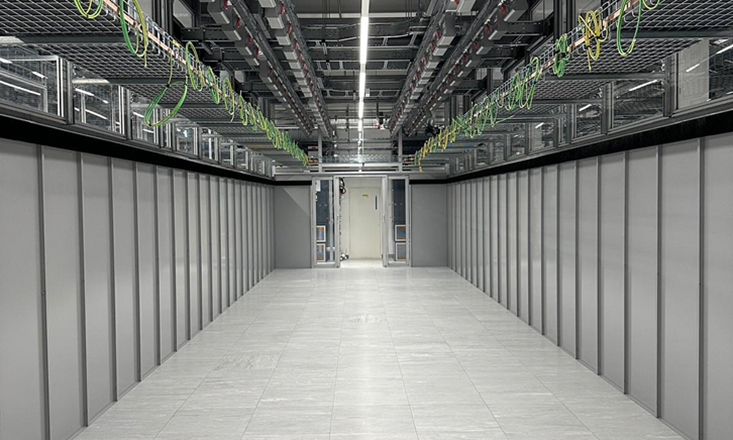
Echelon Data Centres will establish Ireland’s first Green Energy Park at its DUB20 campus in Arklow, Co Wicklow under the government’s Large Energy Users Action Plan.
The company said the development will co-locate data centres with renewable energy generation, including access to up to 800MW of offshore wind energy via a joint 220kV substation with SSE Renewables.
The Irish government added that Green Energy Parks are designed to be primarily powered by renewables, with storage and reduced reliance on the national grid.
The DUB20 campus will also include onsite solar PV capable of generating more than 6,000MWh per annum and battery energy storage systems.
Two onsite energy centres will provide grid-support capability, including one able to export power to the national grid during periods of low renewable output.
Construction of the campus is underway and is due to be completed by 2028 as part of Echelon’s €4.2bn investment in its DUB20 and DUB30 facilities.
“The Large Energy Users Action Plan sets out a clear pathway for how energy-intensive industries can develop in a way that strengthens Ireland’s grid, accelerates renewable deployment and supports our climate ambitions.” said Darragh O’Brien, minister for climate, energy and the environment.
“The Green Energy Park being developed at DUB20 is an important example of that model in action – co-locating data infrastructure with offshore wind, onsite solar, battery storage, and grid-supporting capacity. This is exactly the kind of forward-planned, sustainable development we want to see delivered under LEAP.”
“The establishment of Ireland’s first Green Energy Park at DUB20 demonstrates how large-scale digital infrastructure can be developed responsibly and in lockstep with national climate and energy policy.” said Graeme McWilliams, co-founder of Echelon.
“By co-locating data centre capacity with offshore wind, onsite solar and grid-supporting infrastructure, we are delivering the exact model envisioned under the Government’s LEAP framework – cutting emissions, reinforcing energy security and supporting regional economic growth.”