


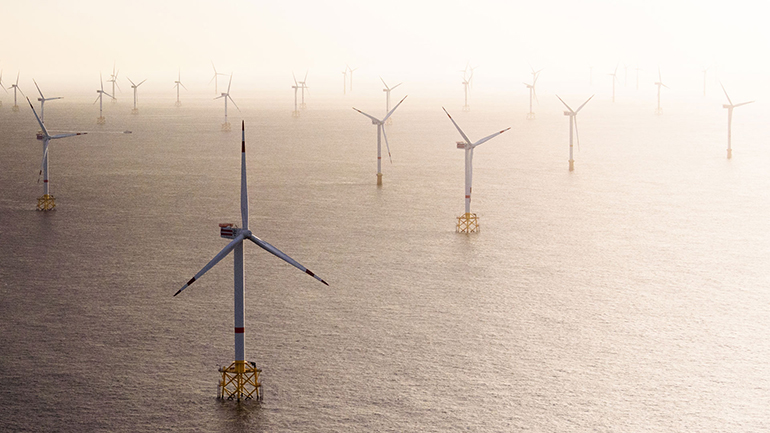
Denmark and Germany have concluded a bilateral agreement to invest in the Bornholm Energy Island project at the North Sea Summit in Hamburg.
The agreement strengthens cooperation between the two countries and supports a cross-border offshore wind and grid project designed to boost European energy security, the governments said.
It will see 3GW of offshore wind capacity connected to both the Danish and German grids, delivering electricity for around three million households in the two countries, according to the agreement.
Katherina Reiche, federal minister for economic affairs and energy, said the project is a flagship of European cooperation and a strategic asset for shared security.
“Bornholm Energy Island is a flagship of European cooperation and a strategic project for our common security,” said Reiche.
Lars Aagaard, minister of climate, energy and utilities, said the agreement marks a new era of interconnection and shared energy security.
“Bornholm Energy Island marks a new era of interconnection and shared energy security,” said Aagaard.
The project will interconnect the Danish and German energy systems and contribute to wider European market integration, strengthening resilience and security of supply.
Implementation will involve close cooperation between transmission system operators Energinet and 50Hertz, the two governments said.
Denmark and Germany have agreed to share the costs required to finance offshore wind support, reflecting expected electricity flows and distribution of benefits.
The agreement represents the first case of two countries jointly sharing the support required for an offshore wind farm, according to the partners.
Bornholm Energy Island is one of eight European Commission priority energy highways and will become the world’s first multi-terminal HVDC hybrid interconnector.
The project has secured €645 million in EU support under the Connecting Europe Facility.