


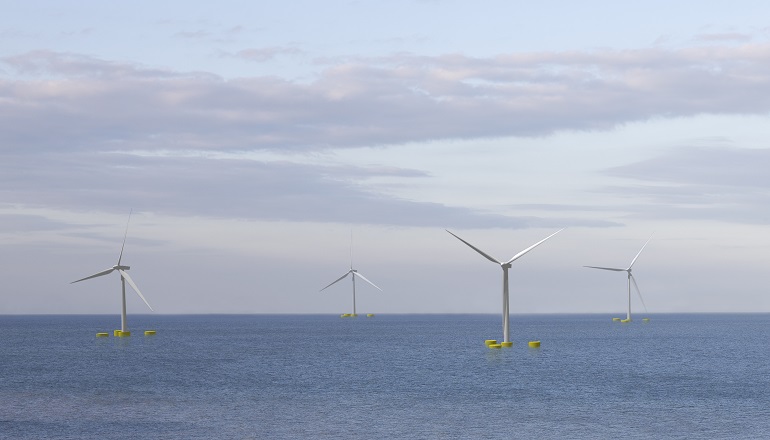
Floating wind developers have secured contracts for 193MW of capacity in the UK government’s Allocation Round 7 renewables auction.
Blue Gem Wind’s 100MW Erebus off south Wales and a bid for 92.5MW from CIP’s 100MW Pentland off Scotland both cleared at £216.49 per megawatt-hour.
The strike price is around 20% lower than the £271/MWh set as a bid ceiling for the technology prior to the auction.
Both test and demonstration schemes are due to be delivered from 2029-30.
A total of 458.4MW of floating wind capacity had been eligible to enter AR7.
Between 200MW and 300MW had initially been predicted to secure CfDs following the government’s decision to set aside £180m to Pot 4.
Eligible schemes which did not land deals include EDF’s 58.4MW Blyth 2, Odjfell OceanWind, Simply Blue and Subsea7’s Salamander plus Flotation Energy and Cobra’s 100MW White Cross.
The results are a reduction on AR6 when a 400MW bid from Flotation Energy and Vargronn’s 560MW Green Volt was the sole winner at a strike price of £139.93/MWh (in 2012 prices).
Blue Gem Wind said it was “pleased” to have won a CfD for Erebus which was awarded a lease by the Crown Estate in 2020 and consented by Welsh ministers in 2023.
The developer added: “Blue Gem Wind will continue to progress the Celtic Sea’s first floating offshore wind project.
“This government’s commitment and support will undoubtedly help unlock the significant opportunity for floating wind in Wales, Cornwall and the south-west of England.”
CIP said the success of Pentland in AR7 marked a “significant milestone” in the UK’s transition to net zero.
It added a final investment decision is due to be made in 2027 for the array off Caithness which received financial backing from state-backed bodies including Great British Energy and the Scottish National Investment Bank late last year.
“This CfD award provides the certainty needed to progress Pentland towards delivery to work closely with the Scottish and the UK supply chain as we move into the next phase of development,” said Pentland Project Director Richard Copeland.
“The project presents a real opportunity to support skilled jobs, invest in local communities and build long-term capability in floating offshore wind.
“We are committed to ensuring the economic benefits of Pentland are felt across Caithness, Scotland and the wider UK.”
DESNZ said the results represented “major progress in our efforts to lead the world in the emerging technologies of the future”.