


ORE Catapult has signed an agreement with Bladena to test blade reinforcement technology designed to extend the operational life of offshore wind turbines.
ORE Catapult said many of the first generation of offshore turbines are nearing the end of their planned lifespans, increasing the need for new solutions to enhance blade durability.
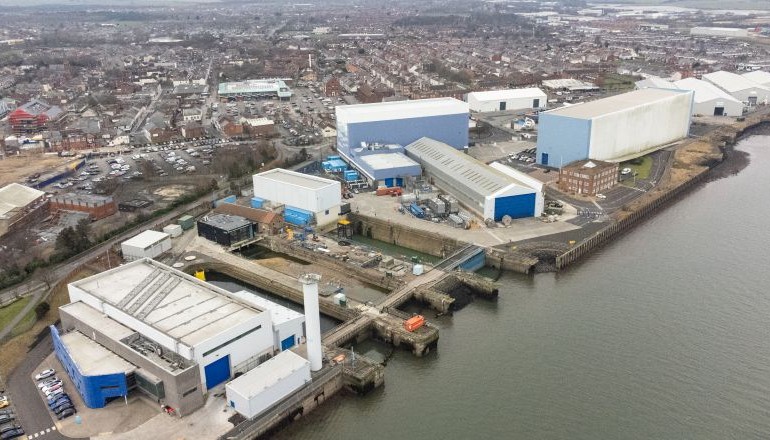
The test programme at the National Renewable Energy Centre in Blyth will use an 88-metre blade to carry out full-scale torsional load tests, described as the first of their kind undertaken by the organisation and understood to be an industry first.
ORE Catapult will design a bespoke test methodology to assess how Bladena’s reinforcement technology influences blade response under twisting forces, with the aim of supporting efforts to improve turbine reliability and reduce lifecycle costs.
Matthew Hadden, chief blade engineer at ORE Catapult, said: “We’re excited to be carrying out this testing with colleagues from Bladena, to examine how we can aid learning of how to better monitor turbine blades as they age through their operational life, with the hope of being able to inform the development of technological solutions across the sector.”
Bladena, part of RES, is a specialist in wind turbine-blade engineering and lifecycle solutions.
Find Molholt Jensen, chief technology officer and founder of Bladena, said: “Testing our technology at ORE Catapult’s world-class facility is a significant milestone in extending turbine lifespans.”
He said: “Stronger blades mean lower costs and more power, and by improving how they withstand stress over time, we can ensure more reliable performance in offshore environments.”
ORE Catapult said the project builds on research by Bladena and partners including the Technical University of Denmark and the EUDP, which found that even minor torsional loads can accelerate fatigue in composite materials and adhesive joints.
Testing will begin in January 2026.