


Global investment in the energy transition reached a record $2400bn in 2024, with $807bn directed to renewable energy, according to IRENA and the Climate Policy Initiative.
The organisations said the renewables total accounted for around one-third of all transition finance, but added that annual growth slowed to 7.3% in 2024 compared with 32% the previous year.
They said the findings form part of the Global Landscape of Energy Transition Finance 2025, published ahead of COP30 in Belém.
IRENA and CPI said 96% of renewable energy investment went to the power sector.
They added that solar PV investment rose 49% to $554bn.
The report said spending on renewable power, grids and battery storage exceeded fossil fuel investment in 2024, although fossil spending increased.
IRENA and CPI said 90% of global energy transition investment remained concentrated in advanced economies and China.
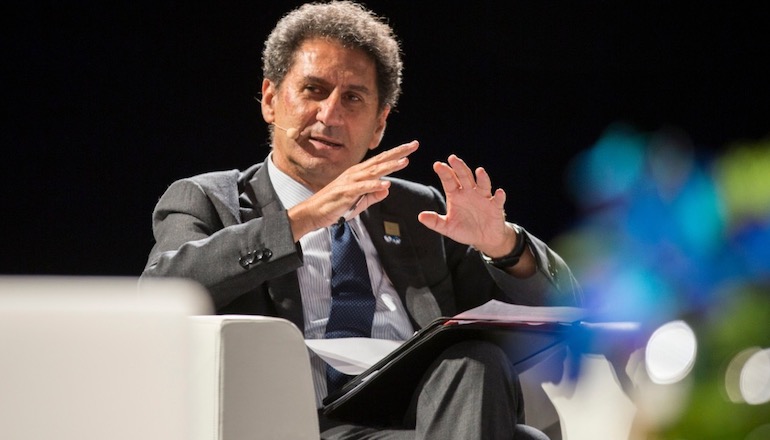
Francesco La Camera, director-general of IRENA (pictured), said: “Investments in energy transition continue to grow but not at the pace needed to achieve the global goal of tripling renewable capacity by 2030.”
He said: “Funding for renewables is soaring but remains highly concentrated in the most advanced economies.”
He added: “Scaling finance for emerging and developing countries is essential to make the transition truly inclusive and global.”
IRENA said advanced and major economies can rely on domestic finance to support their transitions, while lower-income countries depend on external support due to underdeveloped financial markets, high capital costs and fiscal constraints.
The agency said nearly half of total global investment in 2023 was provided as debt, mostly at market rates, while grants accounted for less than 1%.
La Camera said: “IRENA has long called for smarter use of public funds to unlock private investment through risk-mitigation tools.”
He added: “Where private finance won’t flow, the public sector must lead, backed by stronger multilateral and bilateral cooperation and scaled-up climate finance.”
IRENA and CPI said investment in transition-related manufacturing remains critical but highly concentrated, with China accounting for 80% of global factory investment for solar, wind, battery and hydrogen technologies between 2018 and 2024.
They said global investment in these manufacturing facilities fell 21% to $102bn in 2024 due to lower spending on solar PV factories, while battery factory investment almost doubled to $74bn.
The organisations said foreign direct investment and technology partnerships will be vital to expand manufacturing in emerging and developing economies.
They added that dedicated policies are needed to ensure new industrial activity is environmentally and socially sustainable.