


Renewables must expand faster and grids must be reinforced urgently to meet the twin challenges of energy security and climate resilience, according to the International Energy Agency’s latest World Energy Outlook 2025.
The IEA’s flagship report, released amid heightened geopolitical and market turbulence, highlights renewables as the only major energy source to grow across all scenarios, with solar photovoltaics leading the transition.
Countries face rising demand for energy services driven by electrification, urbanisation and data growth, making a stable, diversified renewable supply system essential.
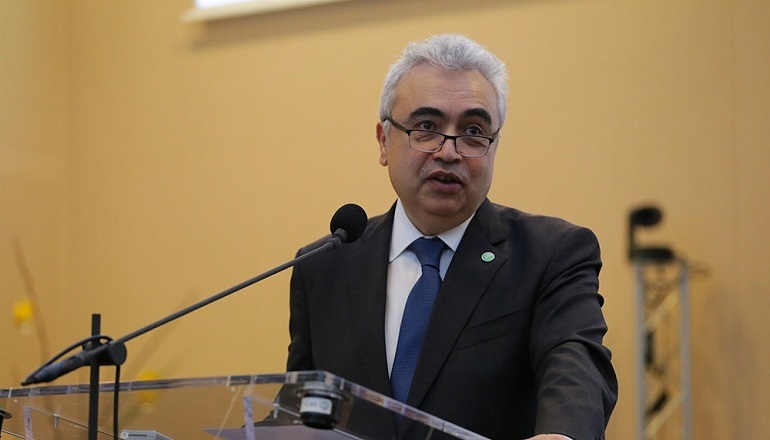
“When we look at the history of the energy world in recent decades, there is no other time when energy security tensions have applied to so many fuels and technologies at once – a situation that calls for the same spirit and focus that governments showed when they created the IEA after the 1973 oil shock,” said IEA executive director Fatih Birol.
Electricity demand is rising faster than total energy use in all of the IEA’s modelled pathways, with spending on electricity supply and end-use electrification now accounting for half of global energy investment.
For now, electricity accounts for about 20% of final energy consumption globally, but it is the key source of energy for sectors accounting for over 40% of the global economy.
Investments in electricity generation have charged ahead by almost 70% since 2015, but annual grid spending has risen at less than half that pace, creating a growing bottleneck for future renewable expansion.
By 2035, 80% of global energy consumption growth occurs in regions with high-quality solar irradiance, underscoring solar PV’s central role.
“Last year, we said the world was moving quickly into the Age of Electricity – and it’s clear today that it has already arrived,” Dr Birol said. “Global investment in data centres is expected to reach $580 billion in 2025… this surpasses the $540 billion being spent on global oil supply.”
Nuclear is also regaining ground, with global capacity set to increase by at least a third by 2035, driven by both large-scale plants and small modular designs.
The report charts a demand shift away from China towards emerging economies led by India and Southeast Asia, alongside nations in the Middle East, Africa and Latin America.
It also flags new vulnerabilities in critical mineral supply chains, noting that a single country is the dominant refiner for 19 of 20 energy-related strategic minerals with an average market share of around 70%, and that concentration has increased since 2020-especially for nickel and cobalt.
Oil and gas supplies look ample near-term, with oil prices in the $60–$65/bbl range and a 50% increase in available LNG supply expected by 2030 as ~300bcm of new export capacity (about half from the US and ~20% from Qatar) comes online, though both markets remain exposed to geopolitical risks and uncertain demand growth.
The WEO reiterates the world is off track on universal access and climate goals, with around 730 million people still without electricity and nearly 2 billion relying on harmful cooking methods.
A new scenario maps a path to universal electricity access by 2035 and clean cooking by 2040, with LPG playing the biggest role.
Even in rapid-decarbonisation scenarios, global temperatures surpass 1.5°C before potentially returning below it later in the century if net zero by mid-century is achieved, the IEA said.
Resilience is urgent: disruptions to critical energy infrastructure in 2023 affected more than 200 million households worldwide, with transmission and distribution grid damages accounting for about 85% of incidents.