


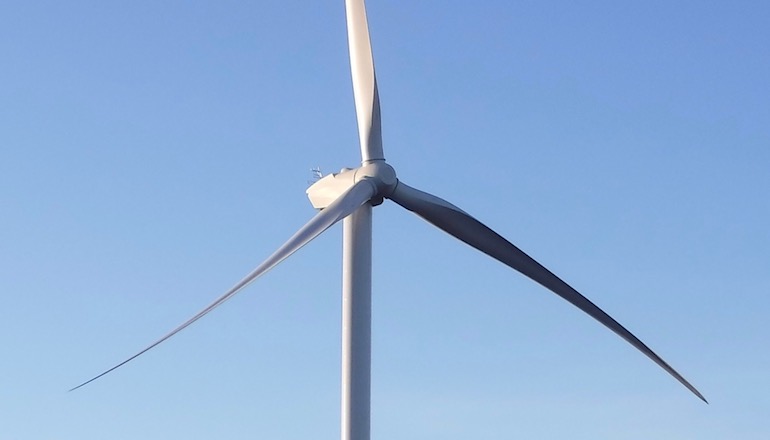
Over 5TWh of clean electricity was curtailed across Great Britain and Ireland in the first half of 2025 – enough to power every household in Scotland for six months – according to a new Montel Analytics report.
The study, Curtailed Renewables in GB and Ireland, found GB curtailed 4.6TWh of renewable energy in H1 2025, up 15% on the same period last year.
Generators received £152m in compensation for being switched off, a cost ultimately paid by consumers.
Northern Scotland alone accounted for more than 86% of curtailed GB volumes, turning down 4TWh of wind power at a cost exceeding £116m.
Montel said Ireland curtailed 905GWh across the Irish Single Energy Market, enough to power all homes in County Dublin for six months. No balancing payments were made to Irish renewable assets under current market rules, though this is expected to change soon.
The report warned of a growing disconnect between renewable deployment and grid capacity, driven by network constraints, particularly in the north of Scotland.
Report author and Montel senior analyst Fintan Devenney said only 63% of wind power that could have been generated in GB reached the grid.
“The cost of turning down that other 37% is passed on to energy bills, meaning consumers are the ones left counting the costs,” he said.
“Unless policymakers pay attention to the need to marry renewable power with public systems and infrastructure, then an outdated transmission network could continue to drive up consumer bills as NESO is forced to operate a network potentially unfit for the net-zero future.”
Despite the higher curtailment volumes, total costs fell 7% year on year, due to lower average prices paid per MWh.
Montel Analytics director Phil Hewitt said this reflected more CfD-backed offshore wind farms coming online, which make cheaper bids to turn down power under their subsidy contracts.
“Over time, curtailment costs could become cheaper as windfarms supported by the Renewables Obligation scheme fade away and CfD supported generation continues to build out further,” he said.
The report also flagged rising solar curtailment, with Ireland switching off around 24GWh in June 2025, nearly seven times more than in June 2024.
With NESO’s Future Energy Scenarios projecting up to 15TWh of solar curtailment annually by 2050, Devenney called for urgent policy alignment between government and industry.
“Now is the time for government to come together with industry and build the holistic view of policy which will enable the optimal siting of generation, sufficient investment in grid infrastructure and the correct investment signals to help alleviate grid constraints,” he said.