


The Climate Change Committee (CCC) today called for a significant increase in renewable energy generation as it presented a new pathway to a decarbonised UK.
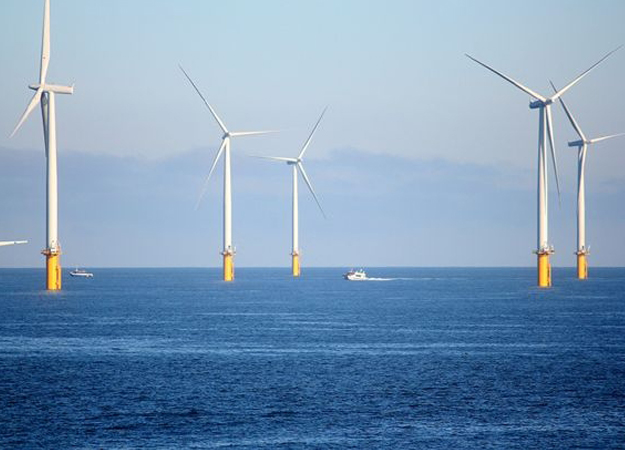
Offshore wind will form the “backbone” of the future system to meet a surge in demand for electricity, according to the committee’s Seventh Carbon Budget report.
By 2040, the CCC’s recommended pathway will see offshore wind grow six-fold from 15GW of capacity in 2023 to 88GW by 2040.
Onshore wind capacity will double to 32GW by 2040, while solar capacity increases to 82GW.
The CCC said that storable forms of energy, including batteries, will be key to ensuring a reliable supply of electricity in adverse weather.
These technologies need to be accompanied by rapidly expanding the transmission grid, upgrading the distribution network, and speeding up the connection process, the CCC said.
Demand for electricity is expected to soar, especially during the 2030s, driven by the switch to EVs and heat pumps.
The Seventh Carbon Budget report sets out how to achieve decarbonisation by 2050, and what decisions need to be made in coming years to ensure success.
The report reveals that emissions must be reduced by 87% (compared to 1990 levels) by 2040.
Electrification makes up 60% of emissions reductions by 2040. This includes decarbonising the grid and replacing fossil-fuelled cars and heating systems with electric alternatives such as EVs and heat pumps.
The report outlines how investment during this decade will create savings over time.
Private sector investment in infrastructure and new technologies will make up 65% to 90% of the financing requirement from 2025 to 2050.
The CCC’s report reveals how net zero will save the average household £1400 a year in energy and fuel costs by 2050.
CCC interim chair Professor Piers Forster said: “The committee is delighted to be able to present a good news story about how the country can decarbonise while also creating savings across the economy.
“We will need government and business to deliver the investment, but we are confident that this Seventh Carbon Budget offers a secure, prosperous future for the UK.”
RenewableUK’s director of future electricity systems Barnaby Wharton welcomed the report.
He said: “This budget puts offshore wind right at the heart of the UK’s clean electricity system, with our capacity growing sixfold between now and 2040.
“This is vital to meet the upsurge in electricity demand which the CCC predicts we’ll see in the 2030s, as more people take up electric vehicles and heat pumps.
“Building up our energy storage capacity alongside this, with more batteries and green hydrogen, will provide flexibility and strengthen the reliability of our future power system.”
Trade body Renewable Energy Association also welcomed the report.
Chief executive Trevor Hutchings said: “The recognition that renewable and clean technologies are vital to decarbonising the UK’s economy in a cost-effective way is an important message from today’s publication.
“So now is the time to work at speed towards net zero and to secure the jobs, investment, environmental and energy security benefits which will flow from this.”
Ed Matthew, director of the UK Programme of the independent climate change think tank E3G, urged the government to accept the recommendations.
He said: “These huge savings are possible because a clean energy system is far more energy efficient and wipes out the devastating impact of spikes in gas prices, which are once again raising energy bills.
“This budget must be accepted by government and supported by all political parties if they have any shred of integrity when it comes to protecting the British people from high energy costs.”
Energy UK’s chief executive Dhara Vyas added: “The increase in the price cap this April is again a stark reminder that Great Britain should not remain dependent on volatile international gas prices.
“Investing in clean, home-grown energy is the best route to lower bills and ensure long-term energy security.”