


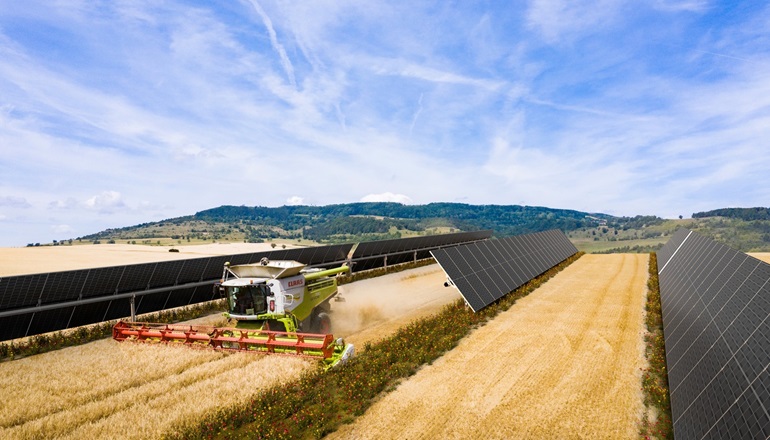
Germany’s installed solar capacity exceeded 100GW at the turn of the new year, according to government data analysed by the German Solar Industry Association.
This installed capacity covered around 14% of electricity consumption in 2024 up from 12% in 2023.
Ground-mounted solar parks mainly drove the growth, with a year-on-year increase of around 40% (6.3 GW).
In 2024, around 17GW of new capacity was commissioned, spanning utility solar farms and rooftop systems, a 10% increase on the previous year (15.4 GW).
By 2030, installed solar capacity is expected to increase to 215GW.
“With continued market growth of roughly the same magnitude over the next two years, we are entering the home stretch.
“However, achieving the next milestones of the energy transition is not a foregone conclusion,” said Carsten Kornig, managing director of the German Solar Industry Association.
“The prerequisite for a corresponding willingness to invest is an attractive and reliable regulatory framework.
“Further political efforts are needed for this.
“The construction of solar systems and storage systems is essential for the future supply of low-cost electricity and the dampening of climate impact costs.
The next federal government should therefore dismantle market barriers and ensure an attractive investment framework,” said Kornig.
Almost two-thirds of citizens would like to see a faster expansion of solar technology, according to a YouGov representative survey commissioned by BSW-Solar.