


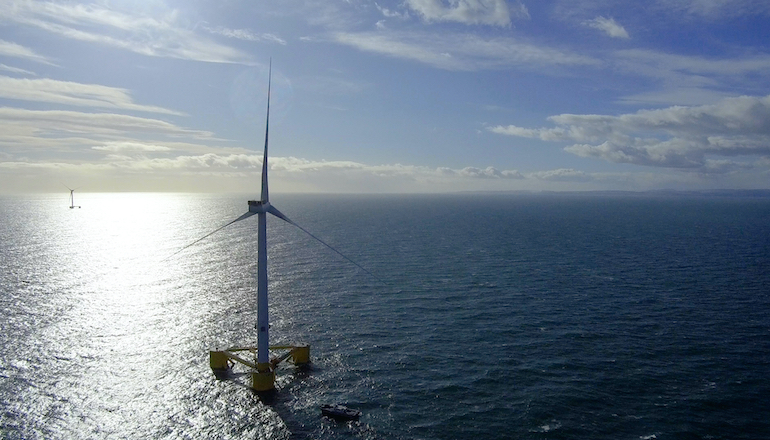
Statkraft has submitted a planning application for the 2100MW Baltic Offshore Delta North fixed bottom offshore wind farm in the Baltic Sea.
The Delta North array is located in Sweden’s economic zone, approximately 100km east of Stockholm and 55km east of Sandhamn island.
The proposed wind farm includes up to 105 bottom-fixed turbines in an area far out at sea to ensure low to no visibility from land.
The planned array is in an area identified by Swedish authorities as suitable for offshore wind, as presented in the outlined revision of the Marine Spatial Plans.
The zone is seen as less likely to have any conflict with other users of the ocean thus enabling coexistence, Statkraft said.
With water depths ranging from 40 to 80 metres, the area is the only suitable location for bottom-fixed offshore wind at scale in the Baltic Sea north of Gotland.
Depending on the final landfall and grid connection location, the site may be connected to hydrogen or e-fuel technologies which provide grid stability by addressing any issues of intermittent power production from offshore wind.
The greater Stockholm region will have the potential to receive an annual production of approximately 8TWh of power from Delta North, which corresponds to 40% of the current electricity consumption in Stockholm County.
Delta North would cater to the increasing electricity demand of the transport sector and the need to transition to a low-carbon industry to meet current climate targets, Statkraft said.
The wind farm would also address the imbalance of the Stockholm region, which only produces about a tenth of the electricity it consumes, it added.
Senior vice president and country manager of Sweden at Statkraft Jakob Norström said: “There are three aspects that make the proposed Delta North wind farm unique.
“Firstly, it would lead to a proportionally vast increase in the electricity production in the Stockholm region to meet the high energy demand from consumers and industry alike.
“Secondly, the project has been developed to be of as little interference as possible to Stockholm’s famed archipelago, and we remain confident that the project has low to no visibility from land.
“Thirdly, the wind farm benefits from the more cost effective and mature technology of bottom-fixed turbine foundations. Neither of these aspects are unique by themselves, but the combination of all three in one project is.”
Statkraft has submitted an application to build and operate the Delta North offshore wind farm to the Ministry of Climate and Economic Affairs as per the law governing Sweden’s economic zone.
After submission, the government will evaluate the developer’s application and seek input from consultation with several agencies before making a decision.