


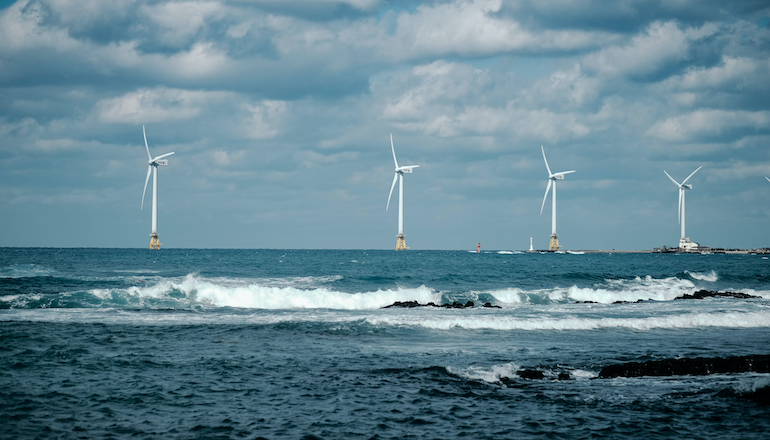
A total 36 offshore wind turbines with a capacity of 377MW were fed into the power grid for the first time in Germany in the first half of 2024 and 73 further foundations were built.
The German offshore wind industry associations and the non-profit foundation Offshore-Windenergie figures show 29 offshore wind projects with an installed capacity of 8858MW and 1602 machines are currently in operation in Germany.
Two more schemes are under construction, according to the data compiled by consulting firm Deutsche WindGuard.
The industry organisations involved in the research were BWE, BWO, VDMA Power Systems, WAB and WindEnergy Network as well as Offshore-Windenergie.
They said: “The results of the first tender for offshore wind in Germany this year confirm the continued interest of investors in the German market.
“However, they also suggest that the tender design should be adapted as soon as possible.
“The bid sum of around €3bn will further increase cost pressure in the industrial value chain and slow down urgently needed investments.
“In the future, the tender design must be geared more strongly towards safe and timely project implementation.
“It is therefore good that the German government wants to evaluate the tender criteria.”
The industry continues to advocate strengthening the diversity of actors and minimizing the risk of default for the implementation of projects with a reformed tender design, the groups added.
In addition, a substantial part of the revenues from the tenders should flow into the ramp-up of the capacities required for the increasing expansion of offshore wind energy, according to the groups.
The “transformation component” introduced by the Federal government, which must be earmarked, is suitable for this purpose, the argued.
The organisations said: “It is important that the offshore wind industry can continue to expand its capacities and maintain innovation and technology leadership.
“This is only possible if the awarded projects can be realised and result in orders from the European wind industry.
“In addition, immediate investments in infrastructure and logistics are required to ensure the timely implementation of the projects.
“This includes, in particular, investments in heavy-duty and storage space in ports as well as their hinterland connections.
“The construction of special ships for preliminary exploration, construction and operation of the projects as well as converter platforms is also needed.”