


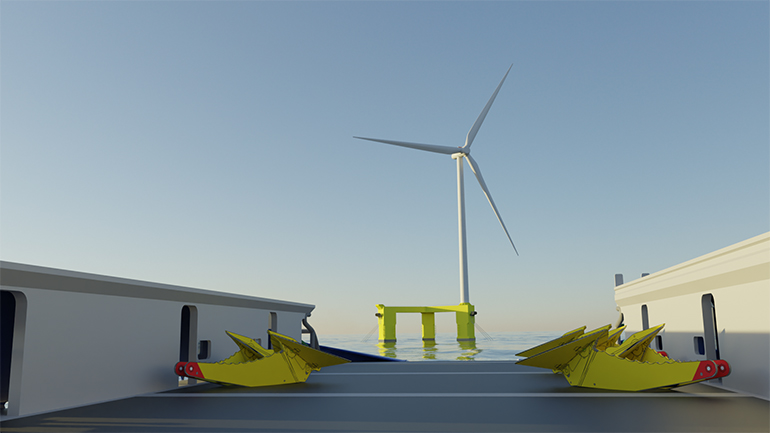
UK-based JBA Consulting has announced its ForeCoast Marine software is to be deployed at low-carbon vessel design project for the floating offshore wind market.
The initiative led by Morek Engineering and funded by the UK government, Department for Transport’s Clean Maritime Demonstration Competition, focuses on the design of a new class of low-carbon installation vessels tailored for the floater sector.
ForeCoast Marine simulates and optimises the operational effectiveness of the proposed vessel designs under a variety of environmental conditions, while staying within the energy limits associated with clean fuels.
The software allows the project team to be able to quickly and reliably evaluate the vessel’s performance in complex operational scenarios.
Prospective ship designs will be compared using a range of key performance metrics including carbon emissions, operational and capital expenditure, programme duration, and metocean and logistical downtime.
“We’re thrilled to collaborate with Morek Engineering on this transformative project to support low-carbon vessel design,” said JBA Consulting technical director Nick Law.
“ForeCoast Marine excels in simulating complex marine operations and, as such, is perfectly positioned to address the intricate challenges presented by operating vessels in some of the world’s most demanding offshore environments.
“This collaboration is set to redefine the limits of the floating offshore wind sector, unlocking enormous potential.”
Morek Engineering managing director Bob Colclough added: “We are excited to be working with JBA.
“Its ForeCoast Marine software will help us achieve the efficiency and emission reductions we anticipate for our low-carbon future floating wind installation vessel (FFIV) project.
“ForeCoast Marine allows us to systematically optimise our installation operations strategy by incorporating our insights into existing techniques and offshore methods.
“Our goal is to develop a vessel concept design configuration that surpasses the capabilities of the current offshore construction fleet, ultimately leading to substantial cost savings for future floating wind project developments.”