


Europe approved significantly more permits for new onshore wind farms in 2023 than in previous years, thanks to the new EU rules on renewables permitting, according to analysis by WindEurope.
Germany permitted 7.5GW, marking a 70% increase from the previous year.
This puts Germany on a promising trajectory to have sufficient permitted projects in the pipeline to bid into the upcoming auctions for a total of 10GW in 2025 alone.
Spain has shown a similar trend with permits for over 3GW granted in 2023, again a 70% surge on 2022, while before 2022 permitting volumes were consistently below 1GW.
In France, there was a 12% increase in permits, reaching 2.2GW last year, while the United Kingdom saw a 10% rise approving just over 1GW of onshore projects.
Permitting improvements were also up in smaller markets like Greece and Belgium.
This is mainly thanks to the new EU rules.
There was the Emergency Regulation on Permitting and then the legislation on permitting agreed as part of the Revised Renewable Energy (RED III). Governments have to transpose the permitting provisions from RED III by 1 July.
A key element in the new rules is Overriding Public Interest (OPI) which applies when projects are challenged in court.
Crucially, it reconfirms and clearly defines which permits need to be provided within the two-year deadline.
It requires governments to digitalise their permitting procedures.
For impacts on biodiversity, developers now have to take the whole population of a species into consideration instead of individual animals.
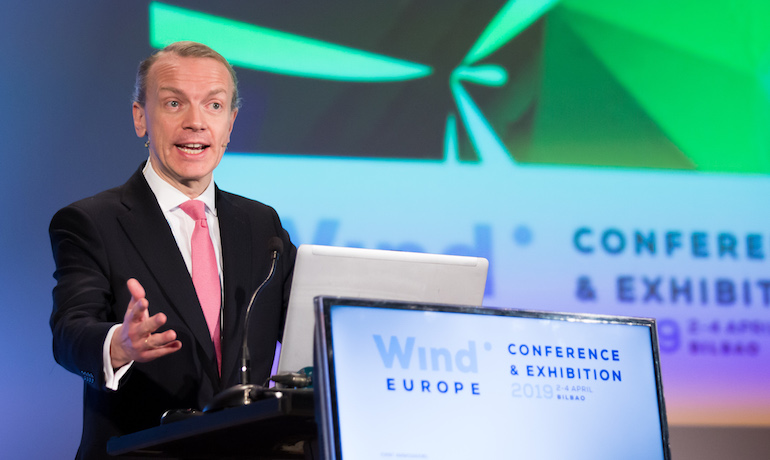
“Permitting of wind farms improved a lot last year, especially in Germany – but there’s still a way to go,” said WindEurope chief executive Giles Dickson (pictured).
“The EU needs to build 30GW of new wind a year to reach its 2030 goals. Current permitting volumes are not enough for that,” he added.
“All national governments need to implement the new EU rules and keep making their processes simpler, faster and more digital.”