


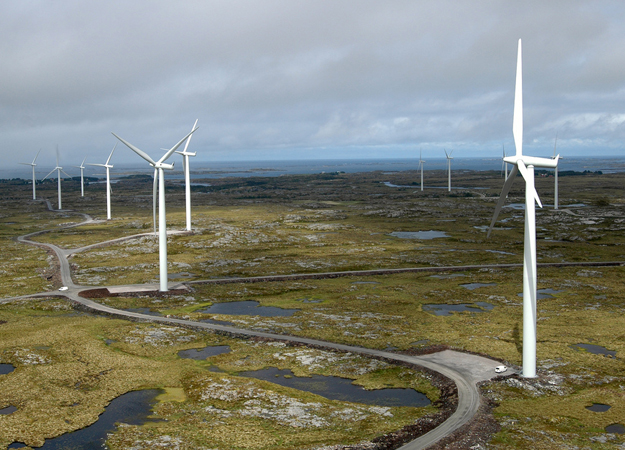
Statkraft is planning to invest up to €6bn in upgrades to its Norwegian hydro and wind power facilities and construction of new onshore wind farms.
The investment programme will include €1.8bn to €3bn in upgrades and transformations of Norwegian hydroelectric power plants.
Statkraft will also spend around €1bn in renewal of existing and construction of new onshore wind farms.
This is expected to result in 2500GWh or more of wind power production, over double the current production, and up to 2500MW increased capacity in hydroelectric power plants.
Statkraft has started the concession and planning process to build the Moifjellet 260MW wind power project in Rogaland.
Repowering includes the Smola, Hitra and Kjollefjord wind farms in Central and Northern parts of Norway with an estimated increase in production of around 40%. Statkraft is at this moment looking at four possible wind power projects in Finnmark, Northern Norway.
The increased future power needs in the country will mainly be covered by new wind power, but hydropower will still be the backbone of its energy system with its unique features, the developer said.
Statkraft plans for major upgrades of hydropower plants in the coming years.
These include Mauranger, Aura, Alta, Svean plants in Western, Central and Northern part of Norway.
In addition, Statkraft will invest up to €2bn in the period 2024-2030 in the rehabilitation of dams and modernisation of older power plants to ensure continued cost-effective and regulated power production.
The investments will make the facilities even more robust against extreme weather, handling of damage floods, and terrorist threats.
“Today, Statkraft is presenting the largest investment program of its kind in hydro- and wind power in Norway for decades,” said Statkraft chief executive Christian Rynning-Tonnesen.
“This will be a major contribution to the energy system in Norway and to the green transition. It will also have positive effects on the Nordic and European energy markets.
“The future power system in Norway and Europe will need both more power and increased flexibility.
“Phasing in more intermittent power such as wind and solar through increased capacity and flexibility in hydropower is key to succeed with the transition to a net zero future.”
Statkraft’s executive vice president for the Nordic region Birgitte Ringstad Vartdal added: “We are working to mature the best hydropower projects.
“These are large and complex, and take a long time to develop and build.
“All projects will depend on a predictable regulatory framework, getting the necessary concessions, the level of power demand, and a good dialogue with local communities.
“We have fantastic wind resources in Norway.
“Onshore wind is the technology that can provide us with new power in the fastest and cheapest way before 2030.
“We should therefore develop the best wind projects so that we can contribute to both industrial development and emission cuts.
“Development of new wind farms in Finnmark depends on access to a limited grid capacity, concessions, and that we are able to find good solutions with local stakeholders and interests, such as reindeer herders.”
Statkraft is also considering many new wind power projects throughout Norway and has a good dialogue with landowners, municipalities, and affected stakeholders.