


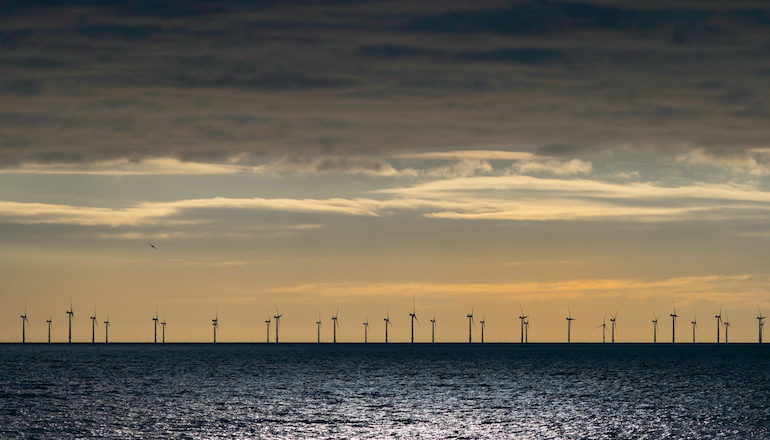
The Estonian Ministry of Climate has approved the report on the environmental impact assessment of the 1GW North-Western Estonian offshore wind farm being developed by Enefit Green.
The site can accommodate up to 60 turbines and has an expected annual electricity production is approximately 4TWh.
At the earliest, the offshore wind farm could begin operation in the 2030s, Enefit Green said.
Estonia has set a goal of producing 100% renewable electricity by 2030 covering all of the country’s needs and achieving climate neutrality by 2050.
In addition to onshore wind farms and solar parks, offshore wind plays a large role in meeting these goals.
Development manager of Offshore Wind Power at Enefit Green Karmo Kõrvek said: “One of the biggest advantages of an offshore wind farm is that there is a more constant and stronger wind at sea even when there is a lack of wind or sun on land.
“The production of renewable energy on a larger scale will also revitalise our economy, giving energy-intensive companies that are considering investing in Estonia an additional incentive to come here.”
Enefit added that: “All local authorities located no more than 20km from the wind farm will receive €1m to €1.4m of funding at current – considering the current average electricity prices – to revitalise local life.
The construction of the wind farm will provide hundreds of new jobs in its construction stage and later dozens of permanent jobs for wind farm caretakers and managers, plus indirect jobs.
Kõrvek added: “The assessment of the environmental impact of the North West Estonian offshore wind farm began already in 2006.
“During this time, a number of studies have been carried out to clarify the possible environmental impacts associated with the establishment of the wind farm and the measures needed to mitigate them.
“For example, during the feeding period of seals and spawning periods of fish, construction work must not be carried out.”
The environmental impact assessment was carried out by Skepast and Puhkim OÜ.