


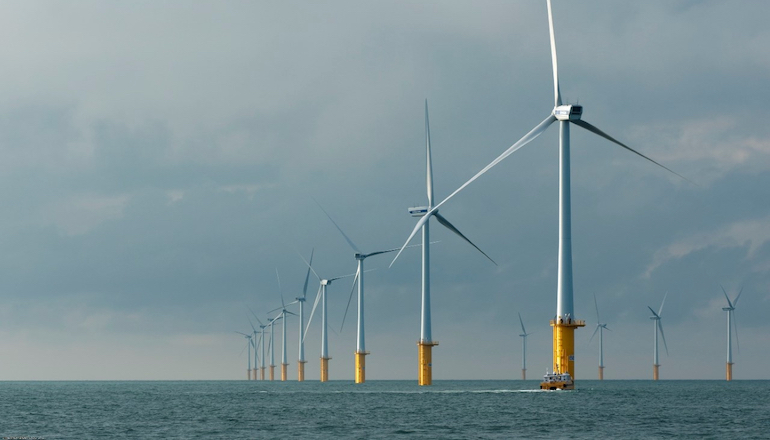
The Arcadis Ost 1 offshore wind farm is now feeding its full capacity into the German electricity transmission grid.
Parkwind’s 257MW offshore wind farm, off the coast of Rügen in the German Baltic Sea, is now feeding the power into a submarine cable with a connection at the Lubmin substation on land.
In the coming years, 50Hertz will implement further offshore grid connections in this sea area.
As early as next year, Baltic Eagle, another offshore wind farm, is scheduled to go into operation via the 50Hertz grid connection system Ostwind 2, which the Arcadis Ost 1 wind farm is connected to.
The substation platform for Baltic Eagle was installed in the summer.
50Hertz chief executive Stefan Kapferer said: “The expansion of offshore wind energy in the Baltic Sea is progressing.
“Today’s official commissioning of the Arcadis Ost 1 wind farm on time is the result of a professional and efficient cooperation between the wind farm and the grid operator and a good example of European teamwork.
“At 50Hertz, further offshore grid connection projects are currently being planned or in the approval process.
“Cross-border projects such as Bornholm Energy Island will become increasingly important in the future.
“Germany needs green electricity for security of supply – other Baltic Sea countries have generation surpluses that they can market. 50Hertz will work at all levels to unlock this potential in a way that is economically fair for all sides.”
Since the end of 2019, the two wind farms Wikinger (Iberdrola) and Arkona (RWE) have been feeding electricity into the lake area off the coast of Rügen via the 50Hertz grid connection system Ostwind 1 with a capacity of 735MW.
In 2024, 50Hertz will begin preparatory work on the route for the Ostwind 3 project, which runs largely parallel to Ostwind 1 and 2, with the planned Windanker wind.
The required submarine and land cable system will not end at the Lubmin substation, but at a new nearby substation.