


Statkraft has delivered solid results in the third quarter even though power prices were significantly down the company has reported.
Value creation was particularly strong from energy management and market activities, it said, adding it continues to deliver on the Norwegian developer’s ambitious growth strategy.
Net operating revenues was €890m (NOK10.6bn) in the third quarter 2023 compared to €1.1bn (NOK13.2bn) in the comparable quarter last year, when the European energy crises caused extraordinary market conditions. Underlying EBIT decreased to NOK 4.9bn (NOK9bn), while profit after tax was NOK4.4bn (NOK3.8bn).
Energy markets continued to normalise and weather conditions were wetter said Statkraft, resulting in a fall in European power prices in the third quarter by 84% in the Nordic region and 76% in Germany compared to the extraordinary high prices in the same quarter last year.
Meanwhile, Statkraft signed several long-term power contracts, including a sales agreement with AstraZeneca in Sweden.
The developer also said it continues to ramp up project activities to reach its ambition to build 2.5GW-3GW of renewable energy capacity per year from 2025, increasing to around 4GW by 2030. The current rate is at 1GW per year.
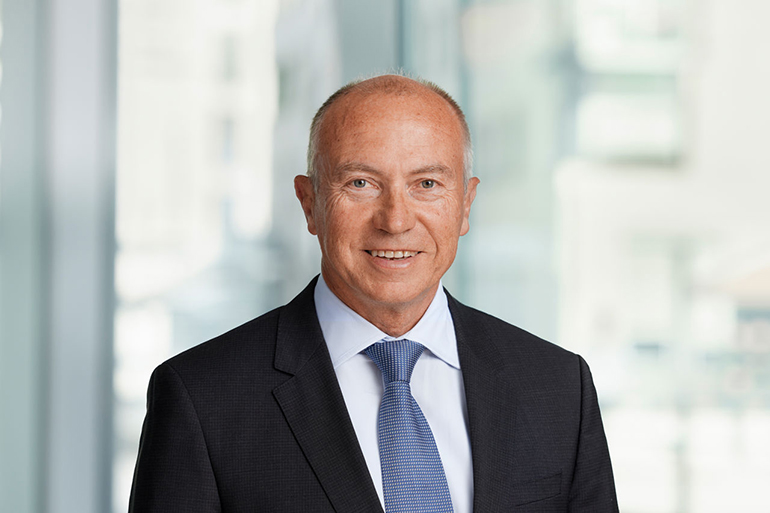
“The market conditions have changed significantly compared to the extreme prices in the third quarter last year, fuelled by the energy crises and the war in Ukraine,” ” said Statkraft chief executive Christian Rynning-Tonnesen (pictured).
“However, Statkraft delivered stable operations, value-creating energy management and profitable market activities, all contributing to maintaining solid results despite much lower prices.”
The developer noted the average system price in the Nordic region was €28/MWh, down €149/MWh from extraordinary prices in the third quarter of 2022 and down €28/MWh from the second quarter of 2023. The price area differences in Norway has decreased in 2023 but the south-west price area (NO2) was still facing higher prices than the rest of the country.
It added markets were primarily influenced by a significantly improved energy balance in Europe, as gas storage levels increased, new renewable energy capacity came online, and wet weather conditions filled Nordic hydropower reservoirs. Nordic reservoir levels were at 100% of median by the end of September and is currently at 99.3% of median, equivalent to 81.2% of full capacity.
Underlying EBIT decreased to NOK4.9bn, including negative value changes from embedded derivatives of NOK0.9bn. This was partly offset by significantly improved hedging effects from Nordic Assets and higher generation from Norwegian hydropower Statkraft said.
Operating expenses increased, mostly due to more business development in Europe, International and New Technologies, higher IT expenses, as well as the effects of a weakening NOK and a higher number of employees as the company scaled up the organisation to support growth.
The Nordics segment was the main contributor to the results despite significantly lower power prices compared to last year. The Markets segment delivered strong results in the quarter, primarily related to origination activities.
Statkraft reported profit before tax of NOK5.9bn, including net financial items of NOK2.1bn. Net financial items in the quarter included positive currency effects, primarily driven by a stronger NOK against the Euro, UK Pound and US Dollar. Profit after tax was NOK4.4bn.
Statkraft continues to develop a broad portfolio of hydro, wind, solar, and battery projects, mainly in the Nordics and Europe it said.
In Ireland, the developer acquired a solar and wind project development portfolio of 758MW and made investment decisions for the 176 MW Clonfad solar project in Ireland and the 69MW Swansea grid stabiliser project in the UK.
In Germany and France, Statkraft acquired 39 operational wind farms with a total installed capacity of 337MW and a significant potential for life-time prolongation and repowering.
“The world urgently needs more renewable energy, and we are working hard to maintain and develop our flexible hydropower assets as well as ramping -up our renewable generation capabilities within offshore and onshore wind, solar, and batteries. This way we renew the way the world is powered”, said Rynning-Tonnesen.
Statkraft also continues to work on its plans to increase installed capacity in existing hydropower plants in Norway. The company plans to double investments and maintenance in the plants to NOK4bn annually towards 2030 and initiate five large capacity upgrades.
The ambition is to increase installed hydropower capacity with 1.5GW-2.5GW, with the company considering the Mauranger, Aura and Alta projects.
In October, Statkraft acquired two Swedish wind power developers.
Most of the portfolio consists of early-phase projects with a total potential of 16GW-17GW of onshore wind and up to 21GW of offshore wind. Also, Statkraft acquired Södra’s shares in Silva Green Fuel, and is looking for a new partner to further develop the technology for advanced biofuels.