


Gresham House and the UK Infrastructure Bank (UKIB) confirmed a partnership, announced in March this year, to support a limited partnership investing in renewables plus storage projects in the UK.
Gresham House Secure Income Renewable Energy & Storage LP (SIRES) has been jointly backed by a £65m cornerstone investment by Centrica and UKIB, which confirmed its £75m commitment on a match-funding basis as part of its overall £200m support for energy storage funds.
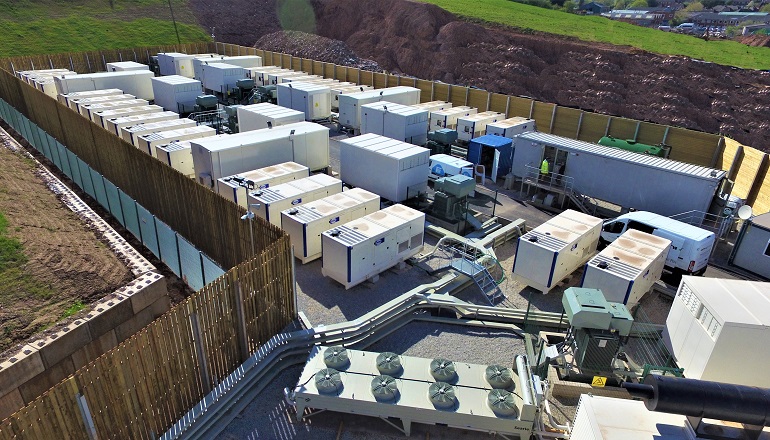
SIRES is focused on developing collocated renewables generation and short duration electricity storage facilities, aiming for these technologies to be connected to the National Grid at a faster pace and lower cost by sharing grid connection points.
Developing these technologies in parallel on the same sites ensures battery storage helps avoid wasting precious renewable energy during periods of abundant supply, instead storing it for use when demand outstrips supply.
For investors, collocation can earn larger, more diverse revenues compared with single-technology sites, delivering income from multiple return streams, including power purchase agreements for renewables projects and optimisation contracts with trading entities for battery storage.
The strategy has already achieved meaningful deployment via its 100%-owned seed asset, a collocated solar and battery energy storage project in Hartlepool, County Durham, with 50MW solar capacity and 75MWh of battery energy storage, which recently began construction.
Gresham House is also exploring a significant pipeline of other projects into which to deploy the new capital.
Peter Bolton, Investment Director, New Energy at Gresham House, said: “With 21 operational storage projects and over 13 years’ experience in renewable investing, we are excited to grow Gresham House Secure Income Renewable Energy & Storage LP.
“The UK still needs to build substantial renewable energy capacity to support its transition from fossil fuels, and battery storage is the only commercially viable technology to store excess renewable power, balancing supply and demand.”