


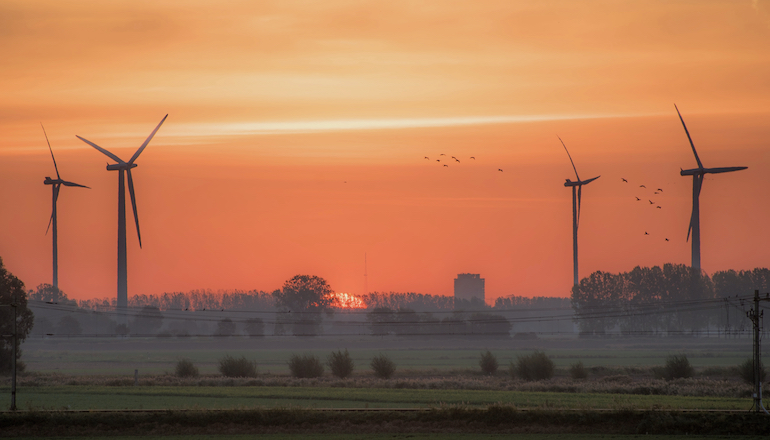
The US Department of Energy (DOE) has released three annual reports showing that wind power continues to be one of the fastest growing and lowest cost sources of electricity in America and is poised for rapid growth.
According to the new reports, wind power accounted for 22% of new electricity capacity installed in the United States in 2022, second only to solar, representing US$12bn in capital investment, and employing more than 125,000 Americans.
The 2023 edition of the Offshore Wind Market Report, prepared by DOE’s National Renewable Energy Laboratory, shows continued progress toward the President’s goal of advancing offshore wind to promote good-paying domestic jobs and provide clean energy.
This report found that the capacity of US offshore wind energy projects being developed and currently operating increased 15% from the previous year to 52,687MW, which if fully developed would be enough to power over 18 million American homes.
This includes two operating projects totaling 42MW, 40 projects under development totaling 47606MW, and an additional 5039MW of potential capacity in the planning stage.
The report also found that in 2022, the domestic offshore wind industry invested US$2.7bn in ports, vessels, supply chain, and transmission, indicating investor confidence in the US offshore wind energy market.
New Jersey and New York combine for the highest energy capacity in the US offshore wind energy pipeline, with more than 20,000 MW, followed by Massachusetts (8189MW), and California (6102MW).
Furthermore, the 2023 edition of the Land-Based Wind Market Report, prepared by DOE’s Lawrence Berkeley National Laboratory, details the 8511MW of new utility-scale land-based wind generation capacity added in 2022-the equivalent of powering 2.5 million American homes.
Key findings from the report include wind energy provided 10% of total electricity nationwide, more than 60% of power in Iowa, and over 40% of power in South Dakota, Kansas, and Oklahoma.
The 2023 edition of the Distributed Wind Market Report, prepared by DOE’s Pacific Northwest National Laboratory, notes that 1755 distributed wind turbines were added across 13 states in 2022.
Distributed wind turbines, which serve on-site energy demand or support operation of local electricity distribution networks, total 29.5MW of new capacity and represent US$84 million in new investment in 2022.
The reports found that tax incentives in President Biden’s Investing in America agenda have led to significant increases in near-term wind deployment forecasts.
They are also helping keep wind power prices competitive with other sources of energy like natural gas, according to the documents.
Since taking office, President Biden has launched the most ambitious climate agenda in history, and wind energy both onshore and offshore will continue to play a significant role in achieving the Biden-Harris Administration’s unprecedented clean energy goals.
US Secretary of Energy Jennifer M Granholm said: “As one of the cheapest energy sources nationwide, wind energy generates enough electricity to power more than 43 million homes and is creating good-paying jobs for the growing domestic wind energy workforce.
“President Biden’s Investing in America agenda is expanding our nation’s domestic supply chain, increasing energy security, and growing the wind energy market to drive our clean energy future.”
Since the passage of President Biden’s Inflation Reduction Act, forecasts for land-based wind energy installed in 2026 have increased nearly 60% from about 11,500MW to 18,000MW, which is enough to power an additional two million homes.
There have also been at least eleven announcements of manufacturing facilities that plan to open, re-open, or expand to serve the land-based wind industry.
And the advanced manufacturing production tax credit in the Inflation Reduction Act is estimated to reduce the cost of offshore wind blades by 27% and steel towers by 18%.