


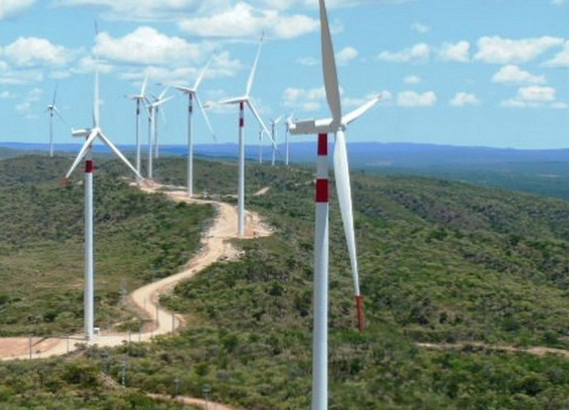
New research from global analytics group Wood Mackenzie predicts that South American onshore wind power will expand 122% through 2032.
The group’s a new analysis says that the continent’s total wind market is set to add 41.2GW of onshore projects by 2032.
This activity will result in a cumulative capacity of 75GW, up from nearly 34GW at the end of 2022, according to the report “South America onshore power outlook” from Wood Mackenzie.
Brazil will lead the way in this timeframe with 23GW and 56% of all growth, followed by Chile.
Green hydrogen will also be a springboard in the long term, with Brazil and Chile alone adding 1.5GW of capacity through 2032 to support this activity. Although several multi-gigawatt projects have been announced, they are in early-stage development and will only scale up after 2030.
“In the past, growth in this region has been driven by the regulated process via auctions, but this started changing with a new wave of free market activity,” said Wood Mackenzie senior research analyst, power & renewables, Karys Prado.
“We will see large offtakers from the commercial and industrial sectors shifting away from auctions and migrating to the unregulated (or so-called free) market to seek favourable power purchase agreements. This will significantly drive buildout in South America moving forward, mostly in Argentina, Brazil, Chile and Peru. However, less mature markets like Colombia and Ecuador will continue to rely on the regulated market.”
Despite the growth, the onshore wind market still faces challenges. “Grid constraints in wind-rich locations, such as the Colombian La Guajira, and increasing solar competition does limit the upside for capacity additions,” added Prado.
“Wind has had a historic advantage, but this will erode as solar buildouts can harness a wider geographic distribution and will become cheaper over time.”