


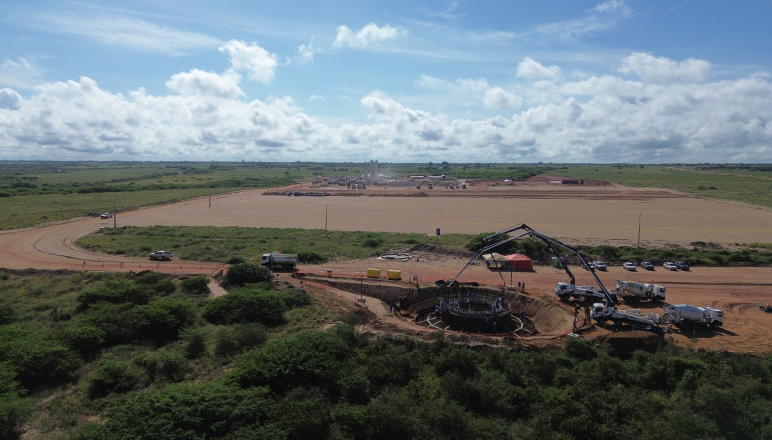
Macquarie Asset Management’s Green Investment Group (GIG) and Norsk Hydro subsidiary Hydro Rein have taken a final investment decision on their 456MW Brazilian Feijao onshore wind project.
In exclusive comments to reNews, GIG said the partners raised a total of $290m of debt from seven commercial banks for the $700m wind project, with GIG owning 50.1% of the project equity and Hydro Rein 49.9%.
The banks involved in the deal are Citibank, JPMorgan, HSBC, BNP, SocGen, Natixis and Santander.
The investment marks the first Brazilian US dollar-denominated renewables project to raise project financing solely from commercial banks without the involvement of a development bank.
The project located in the Piaui and Pernambuco states of north-east Brazil has been developed alongside Brazilian renewable energy developer Casa dos Ventos. Once completed, around 75% of the power will go to Norsk Hydro’s Paragominas bauxite mine and its Alunorte alumina refinery under two long term power purchase agreements, with the remainder to be sold on the open market.
Feijao will use a total of 80 Nordex 5.7MW turbines, with delivery and the start of installation slated for autumn 2023. The funding also covers associated infrastructure for the wind project, including substations and a 50km transmission line.
The project is currently under construction, with operations expected to begin in 2024.
In addition to the wind farm, GIG and Hydro Rein own the rights to develop up to 130MW solar farm as part of the same development.
“The financing showcases the increasing maturity of the local renewables market and offers a model to support the further development of projects in the region,” said GIG managing director Eric Bjonerud.
“The banks chose to work on this because they had the desire to open up a new marketplace in a new way.
“It’s a great chapter in the story of the GIG and Norsk Hydro relationship, which took successful products from Norway and brought them to a different country to try and help decarbonise one of the world’s biggest consumers of energy.”