


RWE intends to invest over €50bn gross in the energy transition by 2030 as part of its Growing Green investment and growth strategy.
Core business will be the expansion of renewables, battery storage technologies, carbon-free backup capacities as well as ramping- up the hydrogen economy.
The new Green Financing Framework lays the foundation for enabling RWE to issue green bonds and use other green financing instruments (such as green loans).
RWE said the framework reflects the ambitious goals of the Growing Green investment and growth strategy presented in 2021.
The focus of projects eligible for green financing is being expanded to include battery storage and green hydrogen projects, in addition to wind and solar projects, already included in the previous Green Bond Framework.
Furthermore, the Framework is consistent with the 2021 ICMA Green Bond Principles (with updated Annex 1 of June 2022) as well as the 2023 Green Loan Principles and follows on a best effort basis the recommendations of the latest proposed EU Green Bond Standard, RWE said.
In addition, the Green Financing Framework is fully compliant with the EU Taxonomy criteria on sustainable economic activities, it added.
The EU Taxonomy Regulation defines which economic activity is to be classified as environmentally sustainable and thus sets a Pan- European standard for sustainable investment.
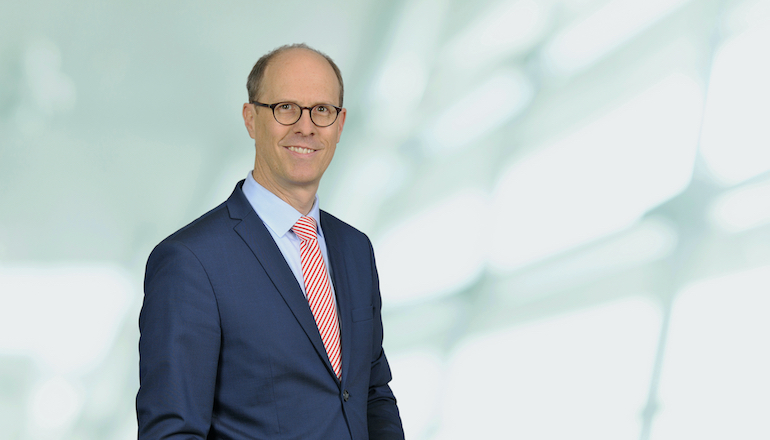
Michael Müller (pictured), chief financial officer of RWE AG, said: “We are vigorously driving forward the expansion of our green portfolio and investing more than 50 billion euros gross in the green energy world by 2030.
“With our new Green Financing Framework, which is aligned with the EU Taxonomy, we are strengthening RWE’s position in the market for green financing instruments and thus the sustainable development of our company.”
Since 2021, RWE has already successfully issued several green bonds with a nominal volume of almost €5bn and has established a strong position in the green finance market, the company said.