


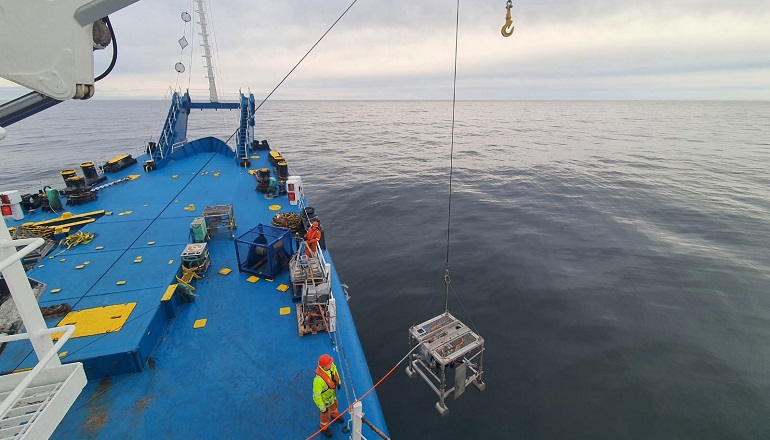
Ocean Winds will begin a two-year site survey campaign for its 2GW Caledonia offshore wind project in the Moray Firth, Scotland.
Wildlife species will be monitored to gather data for an Environmental Impact Assessment (EIA), a key element in the consenting process, following the project’s survey programme across the 429 sq km site.
A pair of floating Lidar devices are due to be deployed in June 2023 at the project site – where water depths range between 40 and 100 metres – by contractor Fugro.
The units are fitted with a range of sensors and equipment designed to acquire marine environmental data including wind, wave and current conditions, among other factors.
Data will be transmitted to shore in near real-time, while raw data will be stored and downloaded during maintenance visits.
In addition to informing the EIA, results will support engineering design for Caledonia.
“The information we are gathering from these surveys will provide an in-depth and reliable picture of the site, including the export cable corridor, above and beneath the waves, and extending to flora, fauna and other crucial data sets,” said Sarah Graham, Head of Engineering for Caledonia.
Additional geophysical surveys are also ramping up, building on work already completed in 2022.
Gardline vessel Ocean Endeavour was mobilised at the start of March 2023 to conduct full surveys of the offshore export cable route in addition to further reconnaissance in the wind farm array area.
The workscope includes benthic sub-tidal environmental surveys and sampling.
A separate vessel, the Titan Discovery, will carry out geophysical and benthic sub-tidal surveys of the nearshore cable route area.
“The work will create a better understanding of the shape and profile of the seabed, water depths and technical constraints, and will be used to inform wind farm design, cable routing and installation, as well as landfall site selection,” Graham added.