


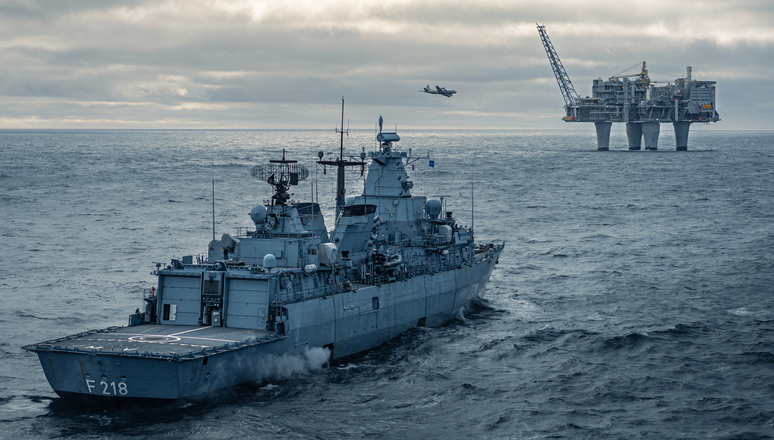
NATO has discussed how to keep key offshore energy infrastructure secure with leading industry figures.
NATO Secretary General Jens Stoltenberg opened a roundtable discussion at NATO Headquarters between industry leaders and civilian and military experts across NATO.
The talks focused on better understanding threats to critical undersea infrastructure and sharing best practices on cooperation and coordination.
Following the sabotage of the Nord Stream pipeline last September, allies have stepped up their military presence in the region.
NATO has also recently created an undersea infrastructure coordination cell to map vulnerabilities, and coordinate efforts between NATO Allies, partners, and the private sector. A new NATO-EU taskforce on resilience and critical infrastructure protection has also been established.
“For NATO, protecting critical undersea infrastructure is essential to our security and defence because it is key to protecting the security and prosperity of our societies,” said the Secretary General.
“Undersea cables carry an estimated $10tn in transfers every day, two thirds of the world’s oil and gas is either extracted at sea or transported by sea, and around 95% of global data flows are transmitted through undersea cables,” he added.