


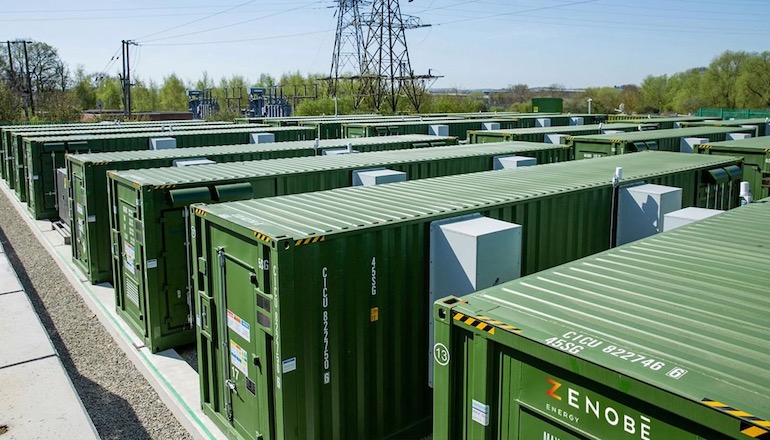
The US installed a total of 848MW utility-scale energy storage projects in Q4 2022, a decline from more than 1GW of installations in both Q2 and Q3.
Decreased installed capacity was largely caused by supply chain and interconnection constraints, according to the American Clean Power Association (ACP) and Wood Mackenzie’s latest US Energy Storage Monitor report.
These headwinds continued to affect the project pipeline, with over 3GW of projects scheduled to come online in Q4 delayed or cancelled, it found.
Overall, the US energy storage market installed 4.8GW of capacity in 2022, nearly equal to the combined 2020 and 2021 installed capacity of 5GW, according to the analysis.
The market added 1067MW across all segments in the fourth quarter of 2022.
This made the quarter only the fifth highest for installations – 33% lower than Q4 of 2021, which is the highest on record.
ACP vice president of research & analytics John Hensley said: “Energy storage had its best year yet in 2022. Cumulative operating utility-scale storage capacity increased by 80%.
“While we saw a slight dip in installations toward the end of the year, the trend is clear: Energy storage is on a rapid growth curve and is already a key component of building a resilient grid that supports abundant clean energy.”
Vanessa Witte, senior analyst with Wood Mackenzie’s energy storage team added: “Despite a slow fourth quarter, total 2022 installations were still 44% over 2021.
“Grid-scale installations increased by 7% year-over-year, CCI by 3%, and residential experienced the strongest growth with installations up 36%.
“Looking ahead, we expect the U.S. storage market to install almost 75GW between 2023 and 2027. Grid-scale installations account for approximately 60 GW, 81% of the new capacity.”
In addition, forecasted capacity for the utility-scale projects will more than double in 2023, partly due to robust storage demand and to projects that were delayed from 2022 coming online, according to the report.