


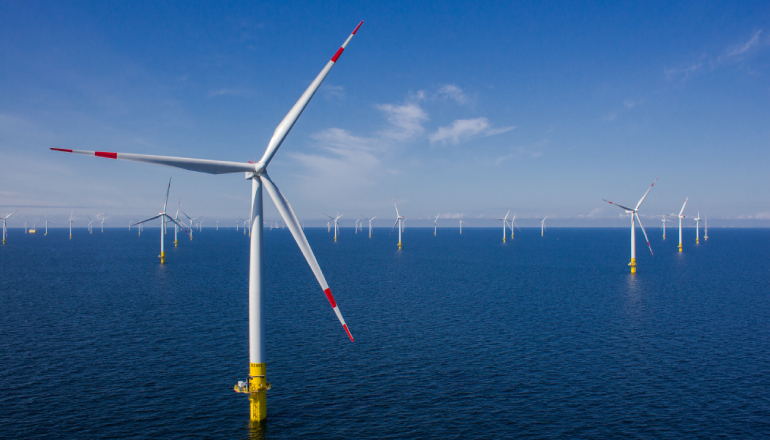
EnBW, bp and the Offshore Renewable Energy (ORE) Catapult will investigate how zero- or low-emission vessels can support offshore wind farms.
This feasibility study will provide an overview of the opportunities and challenges associated with introducing new fuels into offshore wind Service Operation Vessels (SOVs) and recommend appropriate technology developments and supply chain opportunities.
The four-month project will analyse infrastructure, current regulation, supply chains and technology such as internal combustion engines, fuel cells and batteries, and fuels such as biodiesel, electric and hydrogen, before providing recommendations for support vessels.
EnBW and bp are jointly developing three offshore wind projects in two UK locations – ‘Morven’, a potential 2.9GW lease area off the east coast of Scotland, and ‘Morgan’ and ‘Mona’ within a 3GW area in the Irish Sea.
The project will be led by EnBW and bp with the Clean Maritime team at ORE Catapult, and partners including the University of Strathclyde, the University of Edinburgh, and the Manufacturing Technology Centre.
Lauren Hadnum, Clean Maritime Manager at ORE Catapult, said: “The rapid growth in offshore wind across the UK is driving the need for innovation across all aspects of industry, including accelerating decarbonisation of O&M vessels.
“The commitment from partners to investigate both net zero technology and local build for these vessels is an exciting opportunity for UK industry, which aligns with the ambitions outlined in the Refreshed National Shipbuilding Strategy. We hope this piece of work will lay the foundation for future EnBW and bp SOV developments as well as informing wider industry.”