


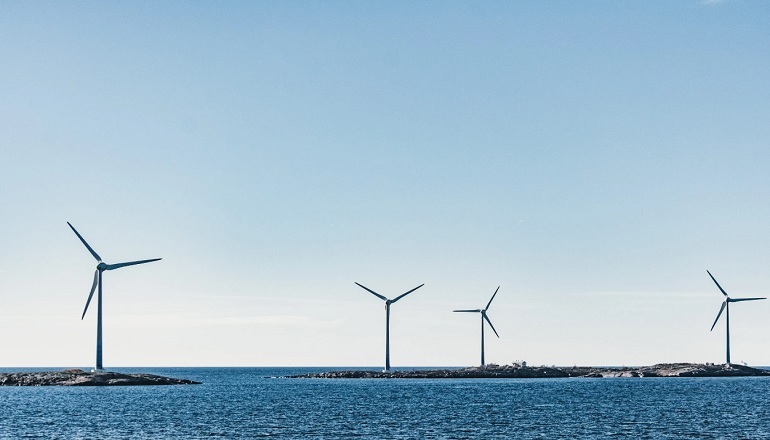
EDF and Engie Green are part of a French research project that aims to characterise turbulence in the Gulf of Lion area of the Mediterranean and its impact on offshore wind farms’ profitability.
The Powseidom project is using remote sensing devices, such as profiling lidar, as a less expensive alternative to anemometers at sea to characterise wind turbulence.
Lidar technology is used to characterise wind resource, both on and offshore, but the Powseidom project will assess its deployment to measure turbulence.
The project involves the partners deploying a Vaisala WindCube v2.1 profiling lidar (certified according to IEC 61400-12-1) on the island of Planier.
This site was chosen because it is representative of offshore conditions, like those of future wind farm sites in the Mediterranean.
The campaign will allow the partners to study the evolution of the characteristics of strong winds on Planier, where winter storms can induce a lot of turbulence.
At the end of 12 months of measurements, the first-ever Mediterranean database of wind and turbulence data acquired at sea will be launched.
While the information on average wind speed and direction is of interest to various stakeholders, information on turbulence intensity is of considerable value to wind farm developers, said the Powseidom consortium.
The measurements acquired at sea will be implemented in a new turbulence intensity reconstruction algorithm being developed by the project team.
The data generated will help with optimising the design of wind turbines and increasing the profitability of projects.
Other partners include Central Marseille, Vaisala and France Energies Marines.