


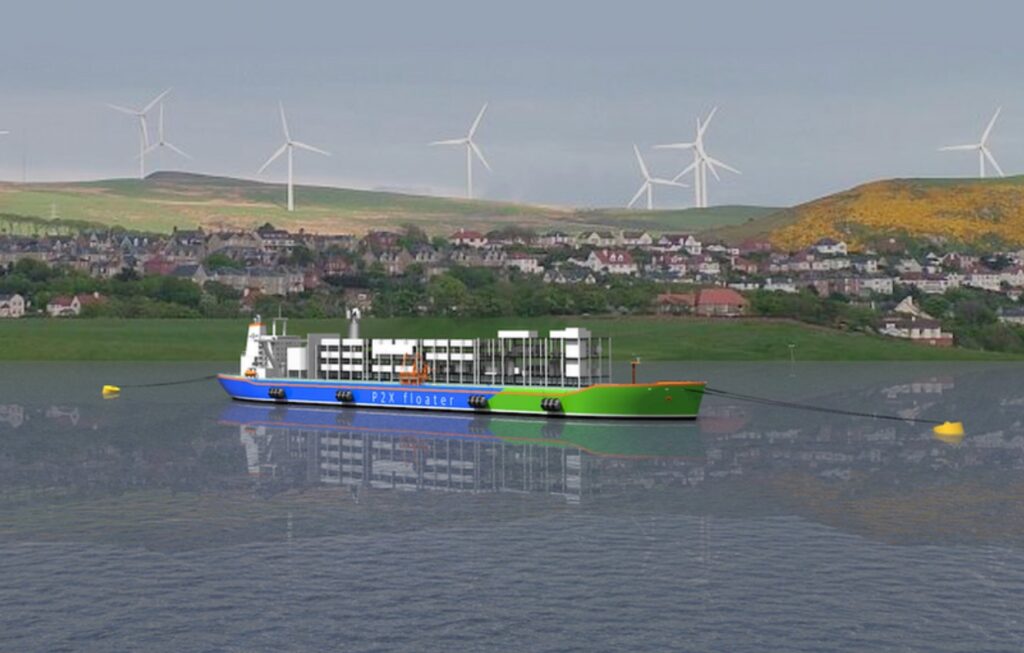
H2Carrier and Greenland-based company Anori have signed a Letter of Intent (LOI) with the purpose of developing the first commercial wind farm in Greenland with subsequent production and export of green ammonia.
The wind farm is projected to comprise 1.5GW renewable energy which will supply power to H2Carrier’s floating production vessel for hydrogen and green ammonia, the so-called P2XFloater.
The P2XFloater design has been developed in a close co-operation with leading engineering firms in Norway.
H2Carrier said the vessel is the first of its kind to be launched on a global basis capable of producing hydrogen and ammonia on an industrial scale.
The P2XFloater is based on well proven technologies from floating production of oil and gas in combination with control systems which optimise renewable power, electrolysers and the Haber-Bosch process for production of ammonia.
H2Carrier will build, own/lease and operate a fleet of P2XFloater on PtX projects globally.
Green ammonia will be stored in tanks onboard the vessel, then exported to smaller shipping vessels and carried to the international market for ammonia.
This large project will enable Greenland to play a key role within global decarbonisation, H2 Carrier said.
H2Carrier chief executive Mårten Lunde said: “All industrial use of ammonia at present is associated with significant emissions of CO2.
“By building on established and proven technologies with a strong safety track record from oil and gas we have developed zero carbon solutions for ammonia which is a key ingredient in agriculture and the food industry.
“Greenland is uniquely positioned to take a leading role internationally for supply of green ammonia and locally, a significant industrial project of this magnitude will be important to the Greenland society by way of employment opportunities and positive economic impact.
“We are proud to co-operate on this project with Anori which express and reflects values and attitudes that we are confident will be valued by the society in Greenland.”
Anori chairman Nicolai Fossar Fabritius, who has previously worked for Vestas, added: “At present, less than 1% of the global ammonia consumption globally is produced from renewable energy.
“We need to turn this around to come closer to 100% as soon as possible in order to reach the targets of the Paris agreement.”