


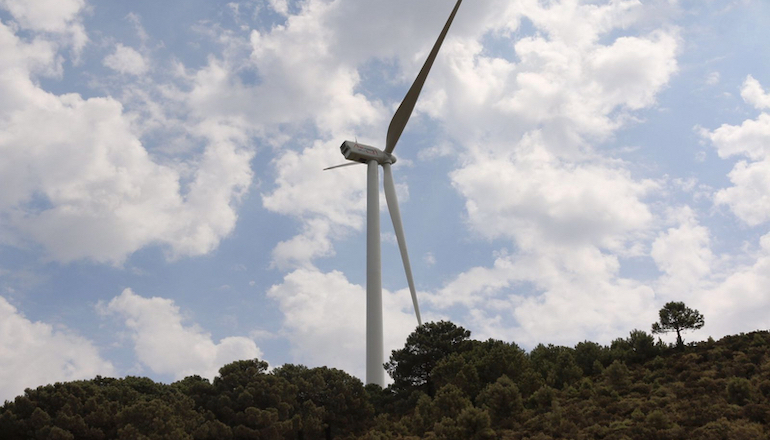
The European Bank for Reconstruction and Development (EBRD) has arranged two syndicated loans to help construct and put into operation two wind power plants in Uzbekistan with a total installed capacity of 1GW in the Bukhara region.
The US$520m financing is the EBRD’s largest renewable energy project to date across its regions.
The Bank’s loan of US$277m to Bash Wind Power Plant (WPP) will consist of an A loan of US$150m on the EBRD’s own account and a B loan of US$127m, which will be syndicated to commercial lenders.
The new wind power plant will generate more than 1,650 GWh of electricity annually and help reduce annual CO2 emissions by 930,000 tonnes.
The EBRD’s US$243m loan to Dzhankeldy WPP will consist of an A loan of US$150m on the Bank’s account, while the remaining US$93m will be syndicated to commercial banks.
This power plant will generate more than 1,550GWh of electricity annually and help cut annual CO2 emissions by 890,000 tonnes.
Both Bash Wind and Dzhankeldy Wind are special project companies owned by ACWA Power – an international developer, investor, co-owner and operator of a portfolio of power generation and desalinated water production plants.
The two projects will also be co-financed by the German development finance institution Deutsche Investitions und Entwicklungsgesellschaft (DEG), the French Development Agency Proparco, Standard Chartered Bank and other banks.
Uzbekistan’s renewables deployment plan targets the development of 12GW of solar and wind capacity by 2030.
These projects are a significant addition to the EBRD’s renewable energy portfolio in the country and will help Central Asia’s largest economy achieve its ambitious objective, the Bank said.
The projects contribute to implementation of a long-term decarbonisation strategy that the EBRD and the government of Uzbekistan have jointly worked on, which will support the plan to achieve a carbon neutral power sector by 2050.