


Yorkshire Wildlife Trust and Orsted are teaming up to develop what could become the largest seagrass restoration project in the UK and Europe.
The partnership aims to restore up to 74 acres of lost meadow in the Humber Estuary as part of Orsted’s planned Hornsea 4 offshore wind farm.
Seagrass is a valuable habitat for the marine food chain and able to sequester large amounts of carbon.
The Humber Seagrass Restoration focuses on Spurn Point and is funded by Hornsea 4.
The large-scale restoration would be a resilience measure for the offshore wind farm, providing potential new and improved nursery habitat for prey species that seabirds, specifically kittiwake, guillemot and razorbill depend on.
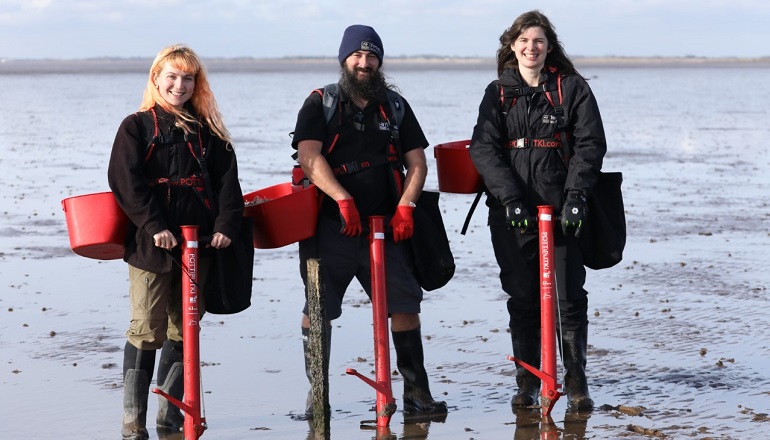
As part of an initial phase, Yorkshire Wildlife Trust has been commissioned to collect and plant seagrass seed across a 9.8 acres pilot area which will be completed by early 2023.
A second phase large-scale seagrass restoration of up to a further 74 acres has been designed and will be funded if Hornsea Project Four secures development consent early next year.
If fully implemented the restoration programme could span the next seven years and would see specialists from Yorkshire Wildlife Trust sustainably collect seeds from areas of healthy seagrass, growing them in their seagrass nursery and replanting them in carefully selected restoration areas.
The Trust will liaise closely with statutory agencies, eNGOs and local stakeholders during both project development and delivery, in addition to monitoring and evaluating the restoration project throughout, to assess and quantify a wide range of environmental benefits.
The Humber Estuary once supported vast seagrass meadows across both banks, covering over 500 hectares at Spurn Point, and vast swathes from Grimsby to Cleethorpes.
Due to industrialisation of the estuary, and subsequent decline in water quality, disease and coastal squeeze, the expansive beds deteriorated, almost completely, between the 1930s and 1980s.
The Humber Seagrass Restoration project provides the foundation for Orsted’s flagship Seascape Restoration Programme, which in collaboration with Yorkshire Wildlife Trust and Lincolnshire Wildlife Trust is working on a wider programme to restore nature around the Humber Estuary, including native oysters, saltmarsh and seagrass.
Orsted has set a goal that all new renewable energy projects it commissions from 2030, at the latest, should deliver a net-positive biodiversity impact.
Sarah Randall, Environment Manager at Orsted, said: “Hornsea Project Four will be one of the world’s largest offshore wind farms, providing a significant source of low-carbon energy to UK homes and businesses.
“Throughout development of the offshore wind farm, we have been working alongside a range of stakeholders and the local community to ensure that the project is built sensitively and sustainably.
“We are delighted to be working with Yorkshire Wildlife Trust on this ambitious seagrass restoration project and hope that this will provide the foundation for future success and innovation.”