


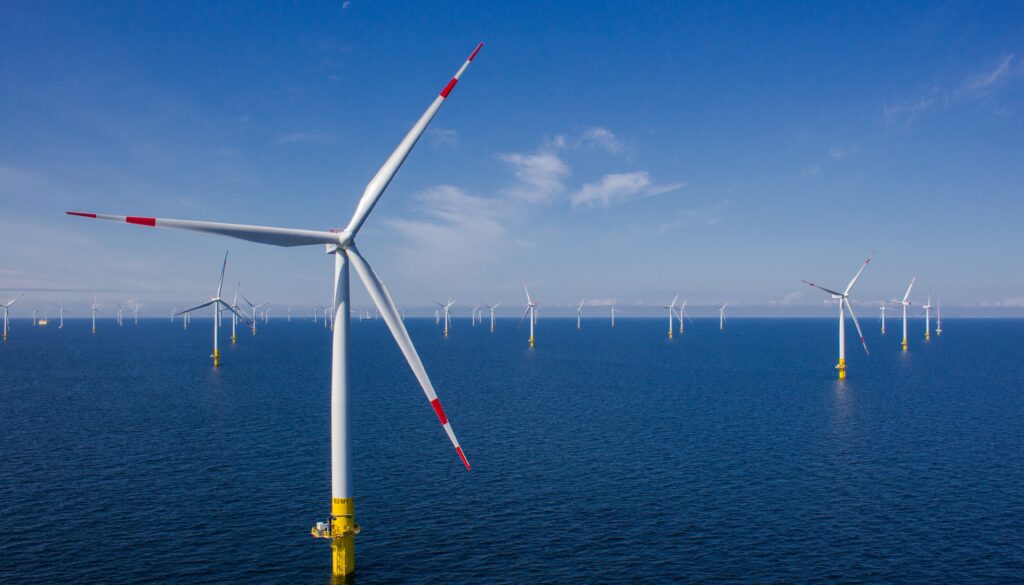
EnBW has signed a power purchase agreement with chemicals producer Evonik covering 100MW of output from its 900MW He Dreiht offshore wind farm.
The 15-year PPA will cover 25% of Evonik’s electricity needs in Europe with renewable energy from 2026.
Since chemical production requires a constant energy supply, Evonik will compensate for fluctuations of the wind energy feed-in through its own balancing management.
“Together with EnBW, we are accelerating the implementation of our ambitious sustainability strategy.
“We are becoming less dependent on fossil fuels and their price fluctuations,” said Christian Kullmann, CEO of Evonik.
“Clearly, the less fossil and more green energy we use, the better the future opportunities for our German and European sites will be.”
Evonik is working on other agreements for green electricity purchased directly from producers to increase the company’s share of renewable energy usage.
“The green electricity from the new offshore wind farm is a very important lever for our goal of reducing greenhouse gas emissions,” said Thomas Wessel, responsible for sustainability on the Executive Board.
“Today, 27% of Evonik’s externally purchased electricity worldwide already comes from renewable sources.
“Implementing the PPA with EnBW significantly increases this share to more than 40%.”
At the same time, the cooperation reduces Evonik’s Scope 2 emissions (electricity from external sources) by 100,000 metric tons of CO2 per year.
The company recently announced the goal of reducing its Scope 1 and Scope 2 emissions from the current 6.5 million tonnes to 4.9 million tonnes by 2030.
About one-third of this net reduction will be achieved by switching to renewable energy sources.
The He Dreiht wind farm will be built about 90 km north-west of Borkum and 110 km west of Helgoland.
It is scheduled to start operating at the end of 2025.
Evonik products are also used in offshore wind turbines, where its crosslinkers ensure “highly robust and long-lasting” rotor blades and its synthetic base oils provide lubrication of turbines’ gearboxes to reduce wear and corrosion.