


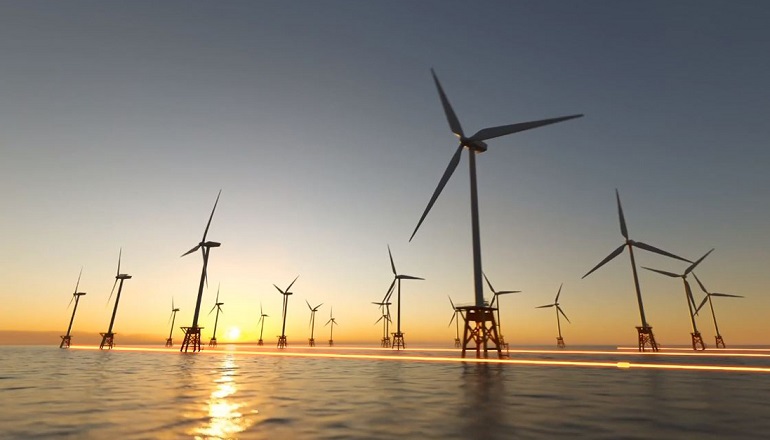
Offshore wind and carbon capture and storage (CCS) solutions can co-exist in the North Sea off the Netherlands, an investigation by Fugro has concluded.
However, the company said four key recommendations must be followed to ensure the safety of future projects.
They are the development of a 3D characterisation model for geological sites, monitoring of carbon dioxide liquid injection to understand the effects on the pressure of the earth and installation of a seismic monitoring system to monitor the actual seismicity at the site.
Finally, in combination with the first three measures, implementation of a traffic light system.
This traffic light system is a seismic risk management system with which, for example, activities can be stopped in good time, Fugro said.
The Netherlands’ Ministry of Economic Affairs and Climate Policy commissioned Fugro to assess whether areas of the North Sea could simultaneously be used both activities.
Both carbon capture and storage and offshore wind are crucial technologies for the Netherlands to achieve its climate goals.
Current ambitions of the Dutch government include two CCS-projects (Porthos and Aramis) as well as 21GW of electricity generated by offshore wind farms by 2030.
Fugro’s director of marine geoconsulting Europe-Africa James Faroppa said: “Through our expert teams’ analysis, we were able to share valuable insights that ensure the assets of the new energy economy operate in a safe, sustainable and efficient manner.
“This study is testament to our ongoing support of the energy transition, and we’ll continue to work closely with our clients and partners to expedite projects and build programmes that further improve energy security, environmental sustainability and safety for all.”
The results of this study will be used to inform regulatory decisions and guide future overlapping CCS and OWF developments.