


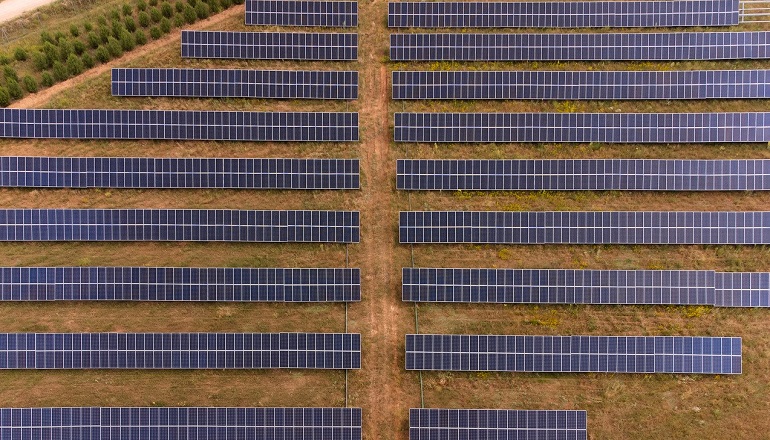
EDP has just signed a global partnership to install up to 100MW of solar capacity at the worldwide sites of automotive components maker Faurecia.
By the end of 2023, more than 60 self-consumption solar parks will be installed at the multinational’s industrial units in Portugal, Spain, Italy, the US, China, South Korea, Japan, and Thailand.
This is the largest distributed solar energy project secured to this date by EDP and the first to be installed with the same partner in several continents simultaneously.
The deal will enable Faurecia to consume renewable energy produced at its own sites, significantly reducing its dependence on the energy grid.
The partnership is also an important step in Faurecia’s objectives to progressively reduce the carbon emissions of its industrial operations (scope 1 and 2).
The partnership is based on an as-a-service model, with EDP investing, operating and maintaining panels under long-term contracts adjusted to the local specificities of each Faurecia market.
It is expected that these more than 60 projects may have up to 200,000 solar panels, and that they will allow the company to avoid more than 60,000 tonnes of carbon dioxide over the next decade.
In Europe and Brazil, EDP has been reaching record values for distributed solar contracted capacity and has already installed around 300MW on companies’ sites and families houses through EDP Comercial.
EDP has been growing in this segment in several European markets, through organic growth and acquisitions, as happened recently in Poland, through Soon Energy, or in Italy, with the purchase of Enertel.
In the US and Asia Pacific, EDP recently entered the distributed solar market through EDP Renewables, with the acquisitions of the North American company C2 Omega and the Asian company Sunseap, respectively.
Faurecia CEO Patrick Koller said: “Producing renewable energy on our sites is a central commitment to meet our 2025 objective to become CO2 neutral for our in-house emissions.
“Leveraging strategic collaboration with global and leading partners allows us to speed up and improve our energy resilience in a more sustainable way.
“Also, it reflects our corporate responsibility to have a positive impact on society and meet the needs of future generations.”