


Plastic pipe supplier Strohm is collaborating with green hydrogen supplier Lhyfe to develop solutions for hydrogen produced from floating wind.
Following the signing of a memorandum of understanding the two companies will work together to develop solutions for hydrogen transport, both onshore and offshore, with initial plans to launch the first floating wind turbine to be integrated with a hydrogen production system.
French company Lhyfe’s Nerehyd solution, a concept worth approximately €60m, including research, development, and the production of the first prototype in 2025, incorporates a hydrogen production facility on the floating platform, connected to a wind turbine.
The concept is adapted to on-grid or off-grid applications, from single wind turbines to large-scale wind farm developments.
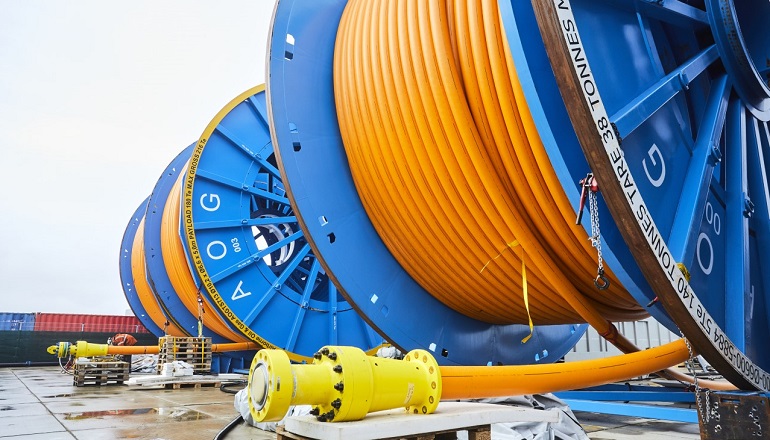
Strohm makes thermoformed composite plastic (TCP) pipe, which is particularly suited for carrying hydrogen offshore and subsea.
The company makes the TCP pipe at its plant in the Netherlands.
The corrosion-resistant technology does not fatigue or suffer from issues associated with using steel pipe for hydrogen, such as embrittlement.
Manufactured in long spoolable lengths and flexible in nature, the pipe can be pulled directly into the wind turbine generator, quickly and cost effectively building an offshore wind farm infrastructure.
Lhyfe and Strohm recognise the value of collaborating in the offshore wind-to-hydrogen space, where superior characteristics of TCP, combined with optimised topside components such as electrolysers, to deliver a safe, high-quality, and dependable hydrogen transfer solution.
Strohm CEO Martin van Onna said: “We are very excited to announce this new partnership. We anticipate an increase in both size and scale of renewable projects in the next decade, and this collaboration will perfectly position our companies to support this.”
Marc Rousselet, director offshore deployment of Lhyfe, added: “Lhyfe is looking at securing the entire value chain, from the production of the renewable hydrogen offshore to the supply at end-customers’ sites.
“This includes controlling the transport of the hydrogen from the offshore production asset to shore.
“Strohm has qualified TCP flexible risers and flowlines, with pressures up to 700 bar at various internal diameters and will add 100% pure hydrogen to its DNV qualification by the end of the year, far ahead of other technologies.
In 2021 Lhyfe commissioned a production facility using electricity sourced directly from a nearby wind farm and currently has 93 projects in its pipeline across 11 countries.