


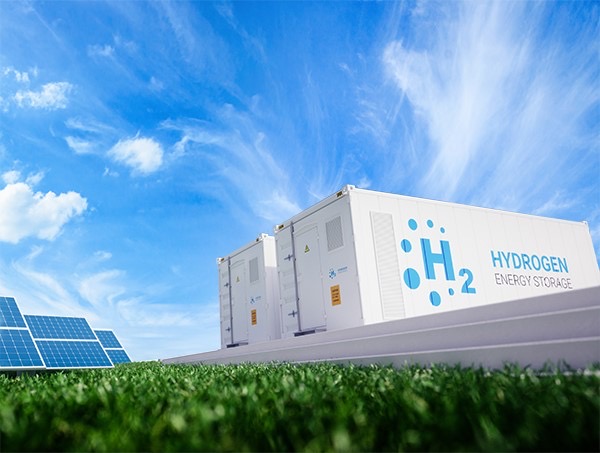
Black & Veatch has been selected by a joint venture of Mitsubishi Power Americas and Magnum Development to provide engineering, procurement and construction (EPC) services for the 220MW Advanced Clean Energy Storage project in Delta, Utah.
The hub will initially be designed to convert renewable energy daily to 100 tonnes of green hydrogen that will be stored in two salt caverns.
Black & Veatch’s incoming chair and chief executive Mario Azar, said that “being part of this innovative team advancing clean hydrogen as a fuel and feedstock is helping pave the way for a lower-carbon energy future that takes the energy transition farther, faster”.
He added: “Black & Veatch is committed to keeping our clients and partners ahead of the curve when it comes to managing the energy transition and meeting their decarbonisation goals.
“The Advanced Clean Energy Storage hydrogen hub is a transformative event in the development of green hydrogen, long-duration energy storage and decarbonization at scale.”
Mitsubishi Power will provide the hydrogen equipment integration, including the 220MW of electrolyzers, gas separators, rectifiers, medium-voltage transformers and distributed control system.
The JV’s president of advanced clean energy storage and chief operating officer Michael Ducker said: “Together with our innovative partners, Mitsubishi Power and Magnum Development are creating the world’s first and largest industrial green hydrogen hub.
“We are committed to advancing the development of green hydrogen, long duration energy storage, and decarbonization at scale and are thrilled to be working with Black & Veatch on building the critical infrastructure needed to achieve our vision towards a 100% carbon-free future.”
Construction started this spring, the hydrogen storage hub will be adjacent to the Intermountain Power Agency’s IPP Renewed Project and support that 840MW, hydrogen-capable gas turbine combined cycle power plant under construction.
That plant initially will run on a blend of 30% green hydrogen and 70% natural gas starting in 2025.
The plant incrementally will expand to using 100% hydrogen by 2045.