


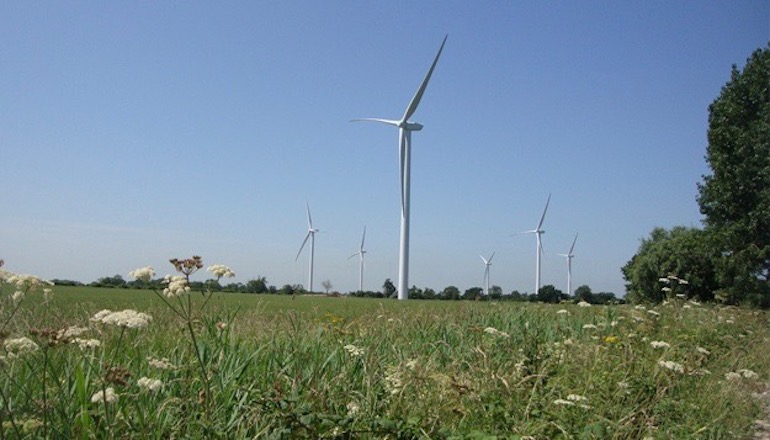
Trade group RenewableUK is calling for the UK and devolved governments to implement planning reforms for onshore wind to support electricity bill payers.
It said the UK can more than double its total onshore wind capacity to 30GW by 2030 from 14GW now, adding £45bn to the economy and supporting 27,000 jobs.
R-UK said the current planning system in England blocks nearly all development of new onshore wind projects, and so it welcomes any move which would enables communities which support onshore wind farms to approve them.
The trade association is also urging the Scottish government to continue to make progress on its new Onshore Wind Policy Statement and planning reforms as a matter of urgency, given the significantly higher wind resource in the country, where it is expected the majority of the UK’s new onshore wind projects will be located.
R-UK chief executive Dan McGrail said: “The risks of remaining dependent on gas for our energy needs are now painfully obvious to bill payers across the UK, but thankfully renewables offer a cheap and rapid escape route.
“We can’t hope to reduce our dependence on gas while also holding back the quickest and cheapest source of domestic power, which is onshore wind.”
“It’s right that across the UK, we should look again at the planning system to make it fit for purpose, so that it doesn’t stand in the way of communities embracing onshore wind or leave applications delayed for years.
“In England there are some simple changes which the government can make to planning guidance to allow more renewable energy projects to be built in England with the support of local communities. Under the current system, just one person can block an onshore wind project from going ahead.
“As they have huge wind resources, Scotland and Northern Ireland will play a leading role in our transition from gas to low-cost wind energy in the UK and it’s vital that their planning reviews which are already underway effectively tackle the bottlenecks we’re seeing in the system.”
The wind industry anticipates that most development between now and to 2030 will take place in Scotland, as well as Wales and Northern Ireland, where wind speeds are highest.