


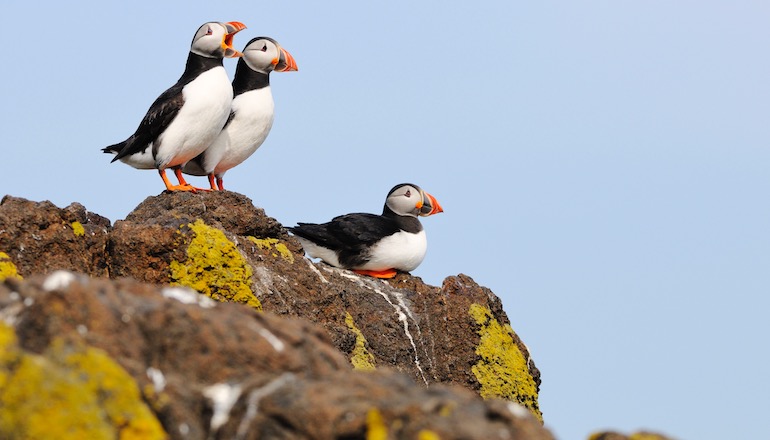
SSE Renewables has backed new advice by the International Council for the Exploration of the Sea (ICES) calling for sandeel fisheries in the North Sea to be managed differently to prevent a decline in seabird population.
ICES figures show that sandeel fishing levels in 2021 were the third highest ever recorded, similar to the levels that caused stock collapse in the 1990s.
Due to large mortality figures of sandeels noted in 2021 ICES has advised that no sandeel fishing should be allowed in 2022.
At present, 97% of sandeel fishing in Scottish waters is carried out by non-UK fishing boats.
The ICES advice states that a decline in sandeel stocks in the North Sea around Scotland may affect some species of birds, especially black-legged kittiwake, and Sandwich tern.
SSE Renewables is seeking to work alongside the UK and Scottish governments and other stakeholders to manage Scottish sandeel fisheries to both help restore the health of the North Sea’s marine ecosystem and allow for the development of offshore wind projects such as its Berwick Bank wind farm.
The wind is in an area that contains many important bird populations and legally protected colonies.
SSE Renewables wants to work with others to implement a nature positive approach to the management of sandeel fisheries, with a view to improving seabird populations and supporting sustainable fishing.
Berwick Bank project director Alex Meredith said: “”This advice from ICES provides robust evidence that the existing management in the SA4 sector of the North Sea – where Berwick Bank will be located – is unsustainable.
It is likely that seabirds will be severely affected by this stock depletion in the 2022 breeding season.
“We are looking to work with government to support efforts to implement an ecosystem-based approach to the management of sandeel fisheries that can support the delivery of Berwick Bank alongside supporting broader environmental goals.
“There is a considerable weight of scientific literature going back over 30 years that demonstrates that kittiwakes, and to a lesser extent, other seabirds are reliant on the availability of sandeels to breed successfully in UK waters.
“Our team recognises that we are in a climate and nature emergency. We want Berwick Bank to show how we can deliver offshore wind while benefiting the marine ecosystem.
“We are committed to working with the Scottish and UK Governments, conservation groups and others towards the better management of sandeel fisheries in UK waters thus creating an enhanced and sustainable food source for sea bird colonies to thrive.”
SSE Renewables head of consents Heather Donald said: “While we know that new wind farms can have an impact on some bird species, we are working hard to lead the way in finding solutions to mitigate these impacts.
“By enabling the sandeel population to regenerate it creates an abundant food source that directly benefits seabirds and supports colonies.”
Sandeels are an important part of many seabirds’ diets.
Stocks of sandeels have been impacted by international fishing pressures and other environmental factors.
By protecting the sandeels Berwick Bank can play a positive role in addressing the decline in Scottish seabird populations, SSE said.
A key part of Berwick Bank’s planning application is to propose that Scotland’s largest sandeel fishery is fully closed for an extended period.