


EDP Renewables and Engie JV Ocean Winds and the “Banque des territoires” have reached the final investment decision on the 30MW Eoliennes flottantes du golfe du Lion (EFGL) floating wind project.
This major step will allow the signing of contracts with the main industrial and financial partners and the launch of the project’s actual implementation phase.
Built in consultation with local stakeholders and respectful of the environment, the EFGL project is already a reference in terms of environmental studies and biodiversity watch and protection, Ocean Winds said.
It is characterised by innovative technological choices and inhibits Ocean Winds ́ ambition to quickly position floating wind energy as a competitive source integrated into the French energy mix, the developer added.
Ocean Winds chief operating officer Grzegorz Gorski said: “Thanks to the high-level teams working on the project, this FID marks a step closer in the construction of a pilot that will serve as a technological reference for the entire floating wind energy sector.
“As the third generation of the Principle Power floater technology – after WindFloat Atlantic (2MW) starting operation ten years ago and WindFloat Atlantic (25MW) from two years ago – the design of the EFGL floater holds significant improvements and new solutions.
“With such a long operational experience, it is now the most advanced floater technology and is ready for a full-scale commercial deployment.”
“Ocean Winds with PPI technology is now the only continuation of the French pilot programme projects bidding in Bretagne Sud tender.
“The other technologies awarded are either discontinued or the awarded developers changed their bets.”
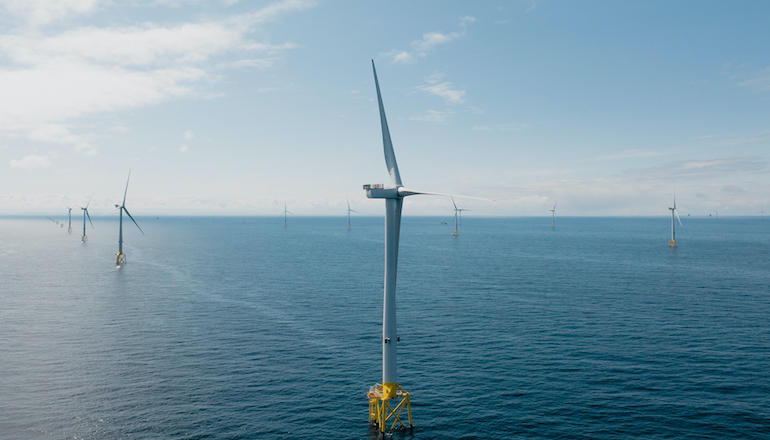
The EFGL pilot project involves the construction and operation of three 10MW floating wind turbines, more than 16 km offshore from Leucate (Aude) and Le Barcarès (Pyrénées- Orientales).
By capturing the regular and sustained offshore winds, the turbines will cover the annual electricity needs of more than 50,000 coastal residents.
The farm is scheduled to be commissioned at the end of 2023 and is expected to operate for 20 years.