


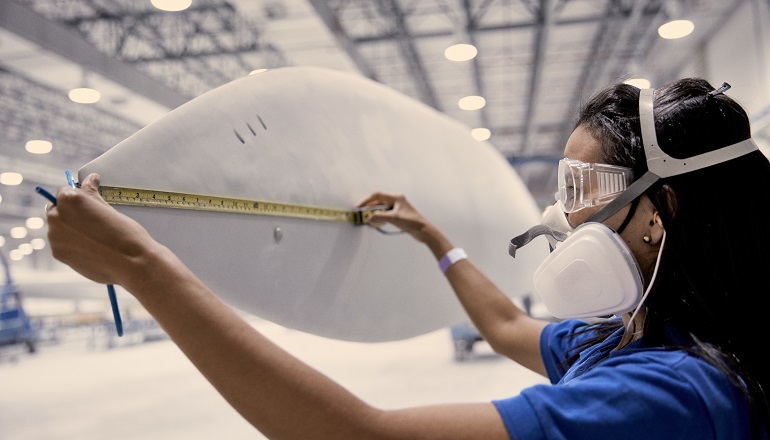
LM Wind Power, part of GE Renewable Energy, will produce zero waste blades by 2030, which it claims is a “significant milestone” for the industry as it seeks to reduce the carbon footprint of its products.
LM Wind Power said it will play a “central role” in supporting its customers to develop fully circular wind turbines that generate less waste during their production.
In practice, LM Wind Power’s vision of zero waste blades means the company aims to send no excess manufacturing materials and packaging to landfill and incineration without energy recovery by 2030.
Waste from manufacturing represents one of the biggest challenges faced by many industries as they seek to reduce their carbon footprint.
At LM Wind Power, nearly one third of its operational carbon footprint comes from waste disposal.
In the wind industry, around 20-25% of the materials purchased by wind turbine blade manufacturers do not go into the final product, and research indicates that blade manufacturing waste volumes are expected to be larger than decommissioned blade volumes during the coming decade.
Olivier Fontan, CEO of LM Wind Power, said. “Now the focus has evolved from making wind power not only competitive, but also making the industry sustainable.
“It is not one or the other but both.
“We are determined to work with our partners to reduce the carbon footprint of wind turbines; together we can be the example of how an industry transforms its value chain to support the green transition and the critical move to a circular economy. Zero waste blades are our contribution to this industry mission.”
In the blade life cycle, around 75% of carbon dioxide emissions occur in the supply chain.
While blade manufacturing waste prevention and recycling will be a major focus for the company, LM Wind Power is also working with partners to establish sustainable, large-scale solutions to recycle decommissioned blades through the DecomBlades project.
The company is also working on the development of next generation blades that can be more easily recycled through the ZEBRA (Zero Waste Blade Research) project.