


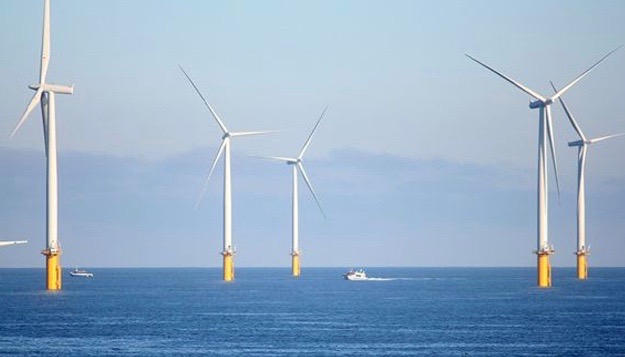
University of Strathclyde, EDF and Miros are working together to research and test a new forecasting methodology for crew transfer at Teesside offshore wind farm off east England.
The Offshore Renewable ACess Loss Estimation & Safety (Oracles+) project will use a diverse set of operational data to better forecast key access conditions for crew transfer operations.
The forecasts will be tested at every stage of the decision-making process, from site supervisor to marine co-ordinator to vessel master and turbine technician, to ensure better vessel dispatch and crew transfer decisions.
The project, jointly funded by The Data Lab Innovation Centre and EDF, will involve a Miros wave radar being fitted to a Teesside offshore wind farm turbine.
Miros’ cloud will be used to present the Oracles metrics to decision makers throughout the decision-chain.
The study will run for a year, which will allow the operational teams to provide feedback on forecasts with respect to their day-to-day work.
University of Strathclyde project lead David McMillan said: “We are excited to be carrying out this research at EDF’s Teesside offshore wind farm in a live demo of Oracles.
The wind industry needs some further tangible operational cost reduction use cases to further drive down the cost of offshore wind, and we are hopeful to deliver one within Oracles+.”
EDF project lead Dr Antoine Joly said: “Safety is our overriding priority, and as such we are pleased to be able to test the Oracles forecasting methodology as a means to improve the safety of our technicians during offshore operations.”
Miros project lead and chief technology Officer, Gunnar Prytz said: “We are thrilled to have the privileged opportunity to collaborate with both academia and an offshore wind developer.
“This research project is key to fully understand and allow project stakeholders to unlock the true value by fusing both real time and forecast data for integration on one user interface platform, Miros Cloud.
“This in turn should allow for safer and smarter decision making to execute successful crew transfers.
“We are optimistic that the results will necessitate a new Miros product offering to the offshore wind sector that will deliver true risk and cost reduction.”