


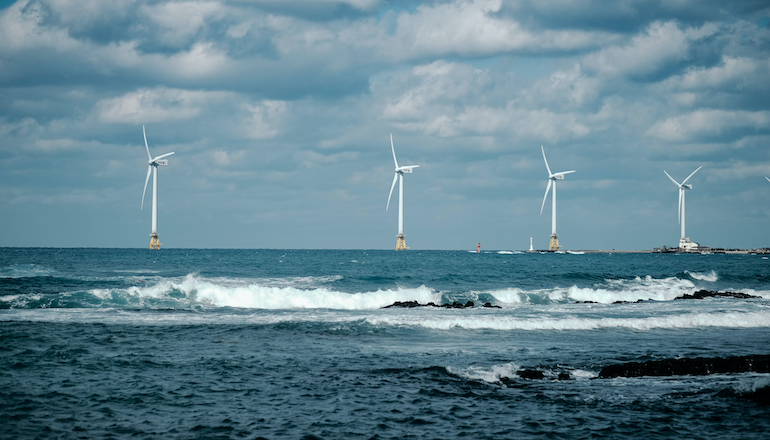
European utilities are set to remain leaders in global offshore wind development in the next five years, according to S&P Global Ratings.
This trend not seen in more widespread technologies such as solar or onshore wind, because of much higher barriers to entry.
European utilities, including Orsted, RWE, Vattenfall, Iberdrola, EnBW, EDF, SSE, and Eneco, are set to remain leaders in global offshore wind development (outside China) in the next five years, given an existing market share of more than 45% and the robust global pipeline of more than 29GW until 2025.
S&P said is sees as “credit positive” the fixed-price nature (subsidised and otherwise) of produced wind power, which supports defensive cash flow profiles for operators as their fleets continue to grow.
Increased competition during the auction process is, however, weakening returns at a time when execution risks are surfacing, notably due to the harsh conditions in the open seas and as pressures on costs, which emerged this year, continue to be felt across the supply chain.
S&P said offshore wind is gradually closing the cost gap in Europe with other technologies, with prices in nearshore bottom-fixed wind auctions in the North Sea falling close to $50/MWh including transmission costs.
S&P’s study found that Europe hosted about 72% of global offshore wind operation at the end of 2020 and will account for 60% of global installed capacity in 2025 through 2030.
S&P sees even more growth potential in offshore wind than last year, notably from new European environmental targets aiming at upping installed capacity to more than 100GW by 2030 from 25GW today.
To achieve carbon neutrality in 2050, Europe may need to install at least 400GW more of capacity, which would only be achievable with floating offshore wind, S&P stated.
“While still immature for now, floating offshore wind technology may allow for accelerated growth in the next decade, promising a reduced need for foundation material, quicker installation and wind power generation at greater water depths,” said S&P.
S&P currently sees as credit positive the fixed-price nature of produced wind power, which supports defensive cash flow profiles for operators as their fleets continue to grow.