


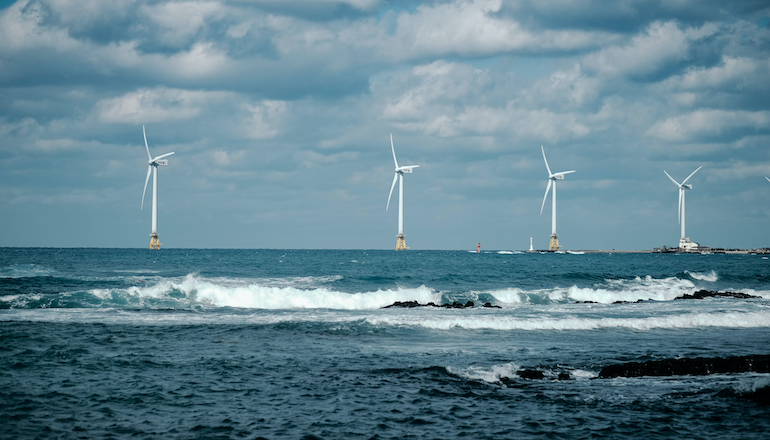
Natural England has called for new offshore wind farms to leave nature in a better state than before and avoid any irreparable damage to the environment.
In the new document Approach to Offshore Wind, it sets out how offshore wind energy can play a vital role in nature recovery as well as tackling climate change.
Natural England will seek to ensure new projects “build in” plans to enhance nature and protect the natural environment from the pressures presented by each new offshore wind development.
The approach will be used with partners, stakeholders, government and other marine users to ensure that a thriving marine and coastal environment is a cornerstone of future developments.
Offshore wind expansion is a cornerstone of the UK’s Net Zero targets and represents a central aim of the Government’s green industrial revolution.
The Government plans to produce 40GW of energy from offshore wind by 2030.
To meet this target, it’s estimated the UK will need to install the equivalent of one turbine at sea every weekday for the rest of the decade.
As the sector plans for this massive growth Natural England said it is timely for it to review its approach.
Natural England is the statutory advisor for nature conservation and landscape for development planning cases, and have many years of experience advising the offshore wind sector on nature conservation.
Natural England chief executive Marian Spain said: “Offshore wind energy provides much needed clean energy to millions of homes and businesses.
“Natural England is committed to playing its part in enabling it to happen but we are also committed to making sure that nature is not forgotten.
“Plans for further expansion over the next decade must allow our marine environment to recover and thrive.
“Our evidence-based approach is the start of a conversation with government, developers and other marine users on how we will all work together to achieve this.”
As the UK sets out to increase its offshore wind output, marine planning must be at the heart of future developments, it said. This will balance the needs of the marine environment, other marine users and net zero targets in order to tackle climate change and address the decline of biodiversity.
To achieve this, the approach outlines a series of objectives and actions that Natural England will focus on in partnership with others, including Defra’s Offshore Wind Enabling Actions Programme.
This includes setting an aim for each development to leave nature in a better state – with infrastructure designed to enhance biodiversity.
It also says measures to compensate for environmental harm should be introduced in advance of any impact on wildlife and the environment – and be strategic, to scale, and evidence-based.
In addition, the report calls for strategic monitoring to inform stronger, evidence-based impact assessments of offshore wind developments and promoting the use of environmentally sensitive design, construction and operation of offshore wind developments to mitigate predicted impacts.
Finally an easy-to-use environmental sensitivities map should be developed so that planners and developers can ensure offshore wind farms and cables avoid irreparable damage to the environment.