


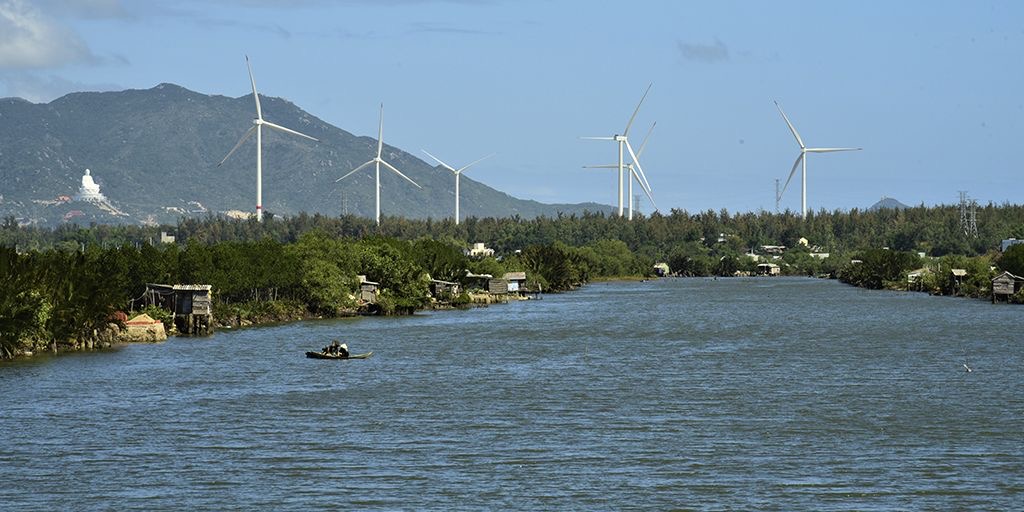
Offshore wind has the potential to supply 12% of Vietnam’s electricity by 2035, according to a new World Bank Group report.
The roadmap, prepared by BVG Associates, provides strategic analysis of the offshore wind development potential in Vietnam.
It found that Vietnam has an energetic and abundant offshore wind resource that is located close to demand centres and in relatively shallow water-although this roadmap focuses on areas further offshore which have higher wind speeds and energy yields.
By replacing coal-fired generation, this could help to avoid over 200 million tonnes of CO2 emissions and add at least US$50bn (€41bn) to Vietnam’s economy by stimulating the growth of a strong, local supply chain, creating thousands of skilled jobs, and exporting to other offshore wind markets globally.
BVG Associates director Neil Douglas said: “Vietnam’s economy and carbon emissions will benefit significantly from the development of an offshore wind sector.
“Our experience in developed offshore wind markets is that ambitious, long-term targets serve as cornerstones for cost reduction and industry development.”
The roadmap analyses two possible growth scenarios for Vietnam’s offshore wind industry.
The ‘low growth’ scenario with moderate expansion of offshore wind, resulting in offshore wind supplying 5% of Vietnam’s electricity needs by 2035.
The ‘high growth’ scenario has significant expansion of offshore wind, resulting in offshore wind supplying 12% of Vietnam’s electricity needs by the same year.
The roadmap suggests that regulations, legislation, processes, and infrastructure need to be developed to deliver the vision that is eventually set by the Government of Vietnam.
The roadmap provides a series of recommended next steps to help create the conditions to establish and grow an industry.
The study is intended to support collaboration between the Government of Vietnam and the wind industry.
This roadmap, a joint WB-IFC study, is one of a series of offshore wind roadmap studies commissioned by the World Bank Group under the joint ESMAP-IFC Offshore Wind Development Program.
Funding for this study was provided by the Energy Sector Management Assistance Program (ESMAP).