


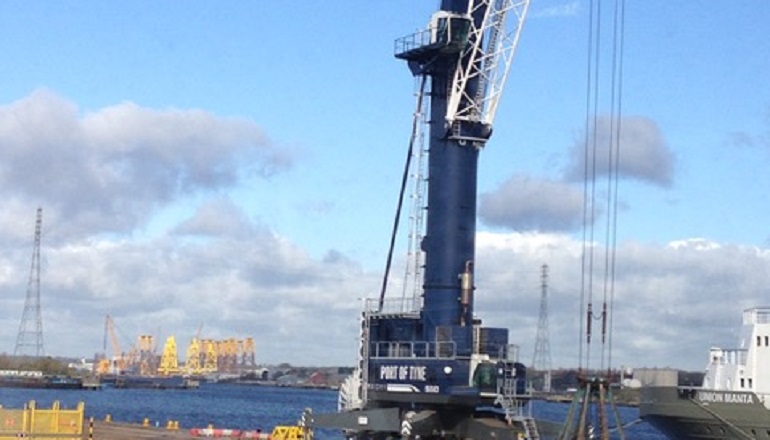
The Port of Tyne in the UK has reduced its annual carbon dioxide emissions by 700 tonnes thanks to the conversion of its diesel powered mobile harbour crane to electric.
The conversion of the Liebherr crane is part of the port’s clean energy programme to become carbon neutral by 2030 and an all-electric port by 2040.
The wider asset electrification programme includes converting other legacy materials handling assets from diesel to low carbon electricity, including existing Drax Hoppers used for bulk materials handling.
These two initiatives alone have reduced the port’s diesel consumption by 260,000 litres and eliminated 700 tonnes of carbon dioxide emissions.
The port, which is supporting operations and maintenance operations for Dogger Bank offshore wind farm, has invested £2m into clean energy projects to improve local air quality.
Port of Tyne has also launched a new clean energy business park for the renewable energy supply chain.
In the future, up to 30% of annual capital expenditure will be allocated to net zero improvements as the port continues to prioritise green innovation and sustainability.
Port of Tyne CEO Matt Beeton said: “We welcome the government’s allocation of £20m to help the maritime sector adopt clean energy and have made significant progress in this direction.
“To date, we have invested £2m into clean energy projects, we have cut emissions to improve local air quality and launched a new clean energy business park for the renewable energy supply chain.
“All our clean energy investments reduce carbon consumption and lower our costs – going forwards we will be allocating up to 30% of our annual capex for more net zero improvements as we continue to prioritise green innovation and sustainability.”