


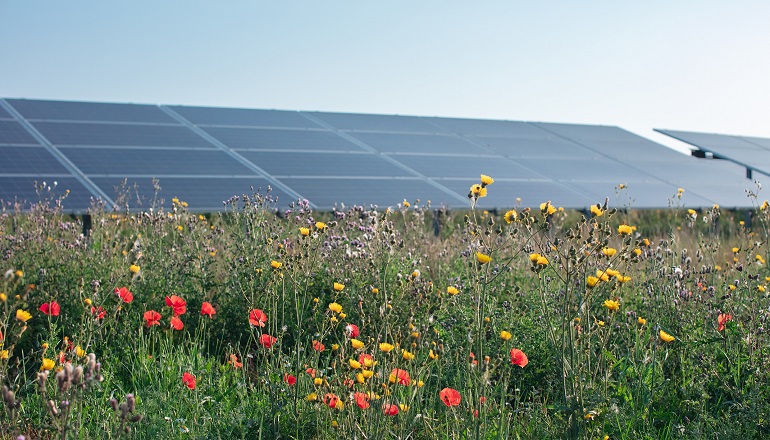
Danish developer Better Energy is leading a pilot project in Vordingborg municipality to demonstrate how future solar parks can be built on restored wetlands.
The company said building solar projects on these areas will both generate clean energy while restoring carbon-rich lowland areas taken out of agricultural production.
The solar park will be located in Kong Mose on low-lying terrain that has been artificially drained.
It is expected to produce 170,000 MWh annually, equal to 70% of the electricity consumption in Vordingborg when up and running by 2022.
In the future, the land will be restored to its original wetland state.
Solar installations for wetlands require a range of new technical features, design and construction, which the project aims to demonstrate.
Better Energy CEO Rasmus Lildholdt said: “If we are to have a reasonable chance of achieving our climate goals in Denmark, we must increase the expansion of solar energy capacity on land.
“We can achieve a positive double effect on CO2 reductions when we place solar parks on carbon-rich lowlands that can then be removed from agricultural production and restored as wetlands.”
The new solar park will be installed on 10,000 hectares of carbon-rich low-lying areas and will correspond to approximately 20% of the total electricity consumption in Denmark.
According to the Danish Council on Climate Change, the removal of artificially drained lowlands from agricultural production and the restoration of these areas to wetlands constitutes one of the key focus areas in reaching the Danish climate targets.
Earlier this year, the Council published a report showing that the restoration of wetlands had the second largest carbon reduction potential this decade, only surpassed by the introduction of 1.5 million electric vehicles.
The Danish Agriculture & Food Council estimates that land taxes will increase ninefold if a farmer with 70 hectares chooses to remove 30 hectares of low-lying areas from agricultural production, restore wetlands and establish a solar park.
The land will be taxed as commercial land and not agricultural land. If, on the other hand, the same farmer chooses to plant energy crops (biomass) for the production of electricity, then the land is taxed at a lower rate.
“The current tax system is hindering the green transition. Farmers are currently punished if they choose to re-wet lowlands and establish solar parks on the land,” said Niels Peter Norring from the Danish Agriculture & Food Council.